
Top 20 Startup Accelerators Worldwide (YC Now Funds 1,000/Year) in 2026
Co-founder at Peony. Former M&A at Nomura, early-stage VC at Backed VC, and growth-equity / secondaries investor at Target Global. I write about investors, fundraising, and deal advisors from the deal-side perspective I spent years in.
Last updated: May 2026
Quick answer: The top startup accelerators worldwide in 2026 are Y Combinator ($500K for 7%, 82 unicorns), Techstars ($220K for 5%), 500 Global ($150K for 6%, 80+ countries), Plug and Play (zero equity, 550+ corporate partners), Antler ($250K for ~9% US), Seedcamp ($350K-$1M, 5 unicorns), Station F (Europe's largest campus, F/ai program), and South Park Commons ($1M per founder). Acceptance rates run 1-3% — what we call the 1-3% acceptance funnel — and the standard deal has converged at $150K-$500K for 5-9% equity.
A startup accelerator is a fixed-term program that provides early-stage companies with funding, mentorship, and access to investor networks — typically in exchange for equity. The global accelerator market reached $5.11 billion in 2025 and is projected to hit $6.07 billion in 2026, driven by AI specialization, deal-term convergence, and geographic expansion into the Middle East and emerging markets.
We run Peony, a document-sharing platform founders use throughout the accelerator journey — from organizing application materials to tracking investor engagement post-Demo Day. Share pitch decks and financials through branded data rooms with secure sharing, password protection, and page-level analytics that show which reviewers and investors engage most deeply. Free to start, Pro at $20/admin/month, Business at $40/admin/month.
TL;DR: Y Combinator expanded to four batches/year and now funds ~1,000 companies annually (60% AI) — 14 companies in the W26 batch hit $1M ARR by Demo Day. Techstars matched YC's structure with a $220K deal ($100K increase). Antler closed $510M in new funds with 2 unicorns. Station F launched F/ai — the first all-AI accelerator backed by OpenAI, Anthropic, Google, Meta, Microsoft, and Mistral. South Park Commons entered with a $1M Founder Fellowship ($400K for 7% + $600K guaranteed). Below: 20 accelerators ranked with deal terms, equity, and success metrics.
How big is the global startup accelerator market in 2026?
The global startup accelerator market reached $5.11 billion in 2025 and is projected to hit $6.07 billion in 2026 at an 18.6% CAGR. Below are the numbers driving the 2026 landscape:
- $5.11 billion — global accelerator market size in 2025, projected to reach $6.07B in 2026 at 18.6% CAGR (Business Research Insights)
- 5,668+ — companies funded by Y Combinator alone, with $600B+ combined portfolio valuation and 82 unicorns (Ellenox)
- ~60% — share of YC's 2026 batches dedicated to AI companies, up from 40% in 2024 (TLDL)
- $220,000 — Techstars' new deal size (Fall 2025), matching YC's structure with an uncapped MFN SAFE, a $100K increase from prior terms (TechCrunch)
- $510 million — Antler's new global fund close (January 2026), with half earmarked for US founders and total capital surpassing $1B (TechFundingNews)
- EUR 1.5B+ — funding raised by Station F portfolio companies in 2025 across 136 rounds (Station F)
- $1 million — South Park Commons' Founder Fellowship offer per founder ($400K for 7% equity + $600K guaranteed in next round), the highest pre-idea investment from any accelerator-style program (SPC Blog)
- 16 sites — Creative Destruction Lab's global expansion across 10 countries, including new locations in Texas, Milan, London, and Doha (CDL)
If you're a founder looking for seed funding or trying to understand how fundraising rounds work, this guide covers every accelerator option from $0 (zero equity) to $1M. For sector-specific deep-dives, see our companion guides on AI accelerators, biotech accelerators, and blockchain/crypto accelerators — and for regional cuts, San Francisco accelerators, Canadian accelerators, China accelerators, and India accelerators.
Quick Comparison: Top 20 Startup Accelerators (2026)
| # | Accelerator | Investment | Equity | Notable Stat | Focus |
|---|---|---|---|---|---|
| 1 | Y Combinator | $500K | 7% + MFN SAFE | 82 unicorns, $600B+ valuation | Generalist (60% AI) |
| 2 | Techstars | $220K | 5% + MFN SAFE | 4,000+ alumni, $120B+ valuation | Generalist, global |
| 3 | 500 Global | $150K | 6% | 2,521 companies, 80+ countries | Multi-stage, global |
| 4 | Plug and Play | $0 (program) | 0% | 35 unicorns, 550+ corp partners | Corporate innovation |
| 5 | MassChallenge | $0 + prizes | 0% | $16B+ alumni funding, 70% survival | Equity-free, impact |
| 6 | Seedcamp | $350K–$1M | Varies | 5 unicorns (Wise, Revolut) | European pre-seed/seed |
| 7 | Antler | $250K (US) | ~9% (US) | $1B+ capital, 2 unicorns | Company building |
| 8 | Station F | EUR 100K (Pioneers) | 1–7% | EUR 1.5B+ raised by alumni (2025) | Europe's largest campus |
| 9 | SOSV / HAX / IndieBio | Up to $550K | 6–9% | $1.5B AUM, 5 unicorns | Deep tech, biotech |
| 10 | Entrepreneur First | Up to $250K | ~9% | 600+ companies, $11B+ value | Cofounder matching |
| 11 | Berkeley SkyDeck | $200K | 7.5% | $1.7B+ alumni funding, Lime | UC Berkeley ecosystem |
| 12 | Creative Destruction Lab | $0 | 0% | 16 sites, 10 countries | Academic mentorship |
| 13 | Startupbootcamp | EUR 25K | ~6–8% | 939+ startups, 72 countries | Industry verticals |
| 14 | Wayra (Telefonica) | EUR 50K–5M | Minority | EUR 260M+ invested, 1,200+ alumni | Telco integration |
| 15 | Dreamit Ventures | Deferred | 0% until Series A | 370 portfolio companies | Healthtech, securetech |
| 16 | Alchemist | ~$36–50K | Varies | 50%+ raise within 12 months | Enterprise/B2B |
| 17 | Capital Factory | Office + mentorship | 1% | Texas' most active early-stage | Texas ecosystem |
| 18 | Founders Factory | Capital + support | 5–7% | Top UK accelerator (FT ranking) | Corporate partnerships |
| 19 | South Park Commons | $1M | 7% | $500M fund (Bloomberg) | Pre-idea, frontier tech |
| 20 | Gener8tor | $100K | Varies | Midwest expansion, gBETA | Regional US growth |
Need a data room for investor meetings after your accelerator program? Peony sets up a branded data room in under 5 minutes with AI auto-indexing that organizes your documents automatically.
Which startup accelerators rank in the global top 20 for 2026?
Below is the ranked list of the top 20 startup accelerators worldwide in 2026, scored on capital deployed, alumni outcomes, and program selectivity. Y Combinator leads on absolute portfolio value ($600B+); Techstars leads on global alumni count (4,000+); 500 Global leads on geographic breadth (80+ countries); Plug and Play leads on corporate-partner depth (550+).
1. Y Combinator (YC)
Website: ycombinator.com | HQ: San Francisco | Founded: 2005
Deal terms: $500K total — $125K for 7% equity (post-money SAFE, or Simple Agreement for Future Equity) plus $375K on an uncapped MFN (Most Favored Nation) SAFE. Four batches per year (expanded from two in 2025). Acceptance rate: 1.5–2% from 20,000–25,000 applications per batch.
Why they lead: YC is the benchmark every other accelerator measures against. Portfolio companies have a combined valuation exceeding $600 billion, including 82 unicorns and 17 public companies. The top four alumni by market cap — Airbnb, DoorDash, Coinbase, Instacart — account for over 84% of total public market value. YC companies have an 87% survival rate (vs. roughly 50% industry average).
2025–2026 signals:
- Expanded to four cohorts per year, effectively doubling throughput (TechCrunch)
- W26 batch: 196 companies, Demo Day March 24, 2026 — 14 companies hit $1M ARR by Demo Day, the highest ever for any YC cohort (TechCrunch)
- Roughly 60% of 2026 batches are AI companies, with the W26 batch running 64% B2B and heavily weighted toward infrastructure (TLDL)
- Recent graduates include Gecko Robotics ($4.2B valuation), Kalshi ($11B valuation), and Astranis ($85M Series D)
Best for: Founders with strong traction or a compelling prototype who want the world's most recognized accelerator brand and investor network. Organize your application materials in Peony (free, $0) to present polished pitch decks and financials with page-level analytics.
2. Techstars
Website: techstars.com | HQ: New York (relocated from Boulder in 2024) | Founded: 2006
Deal terms: $220K total (updated Fall 2025) — $20K for 5% common stock (post-money CEA) plus $200K on an uncapped MFN SAFE. Three-month programs across 6+ cities plus remote. The $100K increase mirrors YC's deal structure.
Why they matter: 4,000+ alumni companies at $120B+ combined valuation, 21 unicorns, and 118 companies valued above $100M. David Cohen (co-founder) returned as CEO in 2024 and is bringing the Boulder accelerator back in 2026. Alumni raise an average of $1M+ in their first post-program round.
2025–2026 signals:
- New deal terms match YC structure (TechCrunch)
- Boulder accelerator returning in 2026 (Colorado Sun)
- Spring 2026 programs launching in Baltimore, LA, London, and more, plus Techstars Anywhere (remote)
- Recent standouts: Zipline ($7.6B valuation), Preply (unicorn), Lotus (Time Best Invention 2025)
Best for: Founders who want intensive mentorship and a global alumni network. Programs span multiple cities and sectors — choose based on your industry vertical. Track which Techstars mentors engage with your materials using Peony (free, $0) page-level analytics.
3. 500 Global
Website: 500.co | HQ: San Francisco | Founded: 2010
Deal terms: Flagship Accelerator: $150K for 6% equity, 4-month in-person program in SF. Sanabil Accelerator (MENA): $100K+. Acceptance rate: roughly 1.5% for Flagship. Next Flagship cohort: October 2026 – February 2027.
Why they matter: $2.2B AUM across 2,521 companies in 80+ countries — one of the most geographically diverse accelerators. 27 public companies (including BillionToOne's NASDAQ listing in November 2025) and 426 acquisitions.
2025–2026 signals:
- Sanabil Accelerator Batch 10 launched with 9 startups from 735 applications (Yahoo Finance)
- Eurasia Batch 10 opening for April 2026 start
- Notable alumni: Credit Karma, Udemy, Canva, Talkdesk, Grab
Best for: Founders from emerging markets or those wanting global exposure. The geographic breadth is unmatched — 80+ countries represented. Share application materials across regions with Peony (free, $0) secure data rooms and link expiry.
4. Plug and Play Tech Center
Website: plugandplaytechcenter.com | HQ: Sunnyvale, CA | Founded: 2006
Deal terms: Zero equity for program participation. Optional investment via PnP Ventures at seed, angel, and Series A stages. Amazon partnership offers up to $100K AWS credits with zero equity.
Why they matter: The world's most active accelerator by volume — 2,800+ startups accelerated, $1B+ AUM (crossed in 2025), 35 unicorns, and 550+ corporate partners. If you need enterprise customers, Plug and Play's corporate network is the primary draw.
2025–2026 signals:
- Added 9 new global locations in 2025 (NYC, DC, Princeton, Indianapolis, Phnom Penh, Tbilisi, Yerevan, Nantong, Taoyuan) (OC Startup Council)
- 250+ investments and 33 exits in 2025, with 67 new investments in the past 12 months
- Over 60 industry-focused accelerator programs across 35+ cities globally
- Launched AI Centers of Excellence combining startups, enterprises, governments, and universities
Best for: B2B startups seeking corporate pilot opportunities and enterprise distribution. Zero equity makes it risk-free to participate.
5. MassChallenge
Website: masschallenge.org | HQ: Boston | Founded: 2010
Deal terms: Zero equity, zero cost, no application fee. Up to CHF 1M in equity-free prizes (Switzerland program). $50K grants via HEBA program. The gold standard for equity-free acceleration.
Why they matter: Alumni have raised $16B+ in funding, created 77,000 direct jobs, and maintain a 70% survival rate. The Switzerland program reports 65%+ post-program fundraising rates and $2.9B+ in alumni funding.
2025–2026 signals:
- Running sector-specific programs: Healthcare, Climate, Security & Resiliency (US), and Finance (2026)
- UK 2026 cohort (4th): 80 startups across AI & Autonomy, Cybersecurity, Foodtech & Agritech, Climate, Health, and Robotics
- Switzerland 2026 (10th edition): Sustainable Food, HealthTech, Efficient Industry — CHF 500K+ in prizes
- HEBA 2026 (5th): 5 startups, $50K grants each with Blue Cross Blue Shield partnership
Best for: Founders who refuse to give up equity at the accelerator stage. Particularly strong for healthtech, climate, and social impact. See our guide to healthcare accelerators for more specialized options.
6. Seedcamp
Website: seedcamp.com | HQ: London | Founded: 2007
Deal terms: First cheque of GBP 350K to $1M at pre-seed/seed stage. Uses Seedsummit standard terms with ASA, convertible, or equity structures. Fund VI: EUR 166M (2023), their largest fund.
Why they matter: Europe's original seed fund with 5 unicorns (Wise, Revolut, Pleo, Sorare, and others), 5 IPOs, and 78 acquisitions. Wise's $11B+ LSE listing and UiPath's NYSE debut are landmark European exits. Portfolio of 477 companies across 32 countries.
2025–2026 signals:
- 32 investments in 2025; most recent acquisition: Curve by Lloyds Banking Group for $158M (November 2025)
- Notable active alumni: Wise (public, $11B+), UiPath (public), Revolut (unicorn), Synthesia, Grover
Best for: European founders at pre-seed/seed who want a hands-on investor with the deepest European tech network. Seedcamp functions more as an early-stage VC with acceleration support than a traditional cohort program. Organize your due diligence materials in Peony — free tier for analytics and sharing, with watermarks and NDA integration on Business ($40/mo).
7. Antler
Website: antler.co | HQ: Singapore (global) | Founded: 2017
Deal terms: Vary by region — US: $250K at $2.75M post-money (~9% equity) plus $2,500 relocation grant. Nordics: EUR 200K initial (EUR 100K for 8.5% + EUR 100K uncapped MFN SAFE) with EUR 300K follow-on = EUR 500K total. Continental Europe (Antler ONE): EUR 500K initial, up to EUR 30M follow-on.
Why they matter: $1B+ in global capital after closing $510M in January 2026. Over 1,800 portfolio companies (400 in the past year alone) with 2 unicorns — Lovable (reached unicorn status in 8 months) and Airalo. Unique "company building" model: you can arrive without a co-founder or idea and form a team during the program.
2025–2026 signals:
- $510M global fund close, half for US founders (TechFundingNews)
- Antler ONE launched in Berlin (March 2026): EUR 500K initial + up to EUR 30M follow-on for Continental Europe founders
- New San Francisco residency program (adding to NYC and Austin)
- Doubled Nordic deal terms in 2025 — EUR 200K initial vs. previous EUR 100K
- Gen Z AI founders leading unicorn creation (Fortune)
Best for: Solo founders, pre-idea teams, or career switchers who want to build from scratch. The co-founder matching model is unique among top accelerators. Present your background and vision through Peony (free, $0) branded data rooms with personalized links.
8. Station F
Website: stationf.co | HQ: Paris | Founded: 2017
Deal terms: Vary by program — Pioneers: EUR 100K for 7% equity plus Silicon Valley bootcamp. Founders Program: 1% equity. F/ai: zero equity. Fighters Program: free, zero equity (for underrepresented backgrounds).
Why they matter: Europe's largest startup campus, with portfolio companies raising EUR 1.5B+ in 2025 across 136 funding rounds — over EUR 1B annually since 2022. Home to 30+ programs, 70 nationalities, and now the world's first all-AI accelerator.
2025–2026 signals:
- Launched F/ai (February 2026): the first AI program uniting OpenAI, Anthropic, Google, Meta, Microsoft, and Mistral in a single accelerator — plus AWS, AMD, Qualcomm, and OVH Cloud. First batch: 20 startups, EUR 34M raised collectively, Deal Day in April 2026 (Sifted)
- F/ai provides $1M+ in compute credits and model access across all partner firms
- Notable 2025 rounds: Multiverse Computing (EUR 215M), Knave (EUR 100M), Lizy (EUR 75M)
- Fighters Program: batch started December 2025; next applications deadline May 2026
Best for: AI founders who want Europe's strongest corporate and investor ecosystem. F/ai's zero-equity model with tier-1 VC and AI lab backing is unprecedented. For more AI-focused programs, see our AI investor directory.
9. SOSV (HAX + IndieBio + Orbit)
Website: sosv.com | HQ: Princeton, NJ | Founded: 1995
Deal terms: HAX (hard tech): up to $550K. IndieBio (biotech): up to $525K ($250K initial for 8% equity, 80% deployed post-program). Orbit Startups (emerging markets): $100K for 6% common equity. AUM: $1.5B across 961 companies.
Why they matter: The world's most active deep tech investor — 5 unicorns (including DraftKings), 6 IPOs, 64 acquisitions. Portfolio companies raised $6.5B in follow-on capital between 2021–2024 across 579 rounds. IndieBio provides actual wet lab space — rare for an accelerator.
2025–2026 signals:
- Closed Fund V at $306M (2024)
- HAX Plasma Forge: $49M partnership with Princeton University (June 2025)
- IndieBio NY appointed new GP Deborah Zajac; NY portfolio: 80 startups, $180M+ follow-on
- Orbit Startups launched: consolidated Chinaccelerator + MOX for emerging markets
Best for: Deep tech, biotech, and hardware founders who need lab space, manufacturing expertise, and patient capital. One of the few accelerators that truly understands hard tech timelines.
10. Entrepreneur First (EF)
Website: joinef.com | HQ: London (with global hubs) | Founded: 2011
Deal terms: Two-phase model — FORM phase: equity-free living stipend for 12 weeks (cofounder matching + idea development at local hub). LAUNCH phase: up to $250K for ~9% equity for 12 weeks in San Francisco (fundraising). Plus $600K+ in partner credits (Azure, OpenAI, Anthropic).
Why they matter: 600+ companies created with $11B+ combined value. Unique cofounder matching model: 80% of participants find a cofounder within 8 weeks. The only major accelerator where you apply as an individual, not a company.
2025–2026 signals:
- Two parallel programs: one for recent graduates, one for those with 2–6 years of work experience
- Locations: London, Paris, Bangalore, New York, San Francisco
- Launched def/acc (defensive acceleration): a specialized cohort focused on building technology to counter pandemics, cybercrime, and AI risk
- Fireside chats with Jack Clark (Anthropic) and Dwarkesh Patel signal strong AI/deep tech focus
Best for: Technical individuals (engineers, PhDs, researchers) who want to start a company but lack a co-founder or specific idea. EF's model is fundamentally different from every other accelerator.
11. Berkeley SkyDeck
Website: skydeck.berkeley.edu | HQ: Berkeley, CA | Founded: 2012
Deal terms: $200K for 7.5% equity (SAFE). Pad-13 program: $500 fee or 1% equity. Mayfield AI Garage: non-dilutive $25K–$50K stipend. Fund size: $85M under management. Demo Day attracts 600+ investors.
Why they matter: $1.7B+ in alumni funding raised, with 50%+ follow-on rate and 20% of companies reaching $100M+ valuations. Access to 500,000 Berkeley alumni and 600+ SkyDeck advisors. Notable alumni include Lime (unicorn).
2025–2026 signals:
- Mayfield AI Garage Year 2 expanded eligibility to Berkeley alumni who graduated after 2022 (runs May–November 2026)
- 250+ startups hosted per year across three programs
- 694 total companies in portfolio (Tracxn)
Best for: University-connected founders (especially Berkeley ecosystem) who want Silicon Valley access plus strong AI/deep tech mentorship.
12. Creative Destruction Lab (CDL)
Website: creativedestructionlab.com | HQ: Toronto (multi-site global) | Founded: 2012
Deal terms: Zero equity, zero fees — a non-profit mentorship program. CDL facilitates $100K–$1M in external investment from mentors and investors who participate in the program. Cost is only your time commitment (9-month program).
Why they matter: Expanded to 16 sites across 10 countries in 2025–2026. Program streams include Quantum, AI, Climate, Space, Health, and the new CDL Defence for dual-use technologies. University-embedded model (Rotman, Oxford, MIT, INSEAD, Imperial College, etc.) provides world-class technical mentorship.
2025–2026 signals:
- New 2025 sites: CDL-Texas (Texas A&M), CDL-Milan (Politecnico di Milano/Bocconi), CDL-San Sebastian (IESE), CDL-London (Imperial College)
- CDL-Doha launched 2026: partnership between ESMT Berlin and HEC Paris, with CDL AI, CDL Health, and CDL AgriFood streams (HEC Paris)
- CDL Defence launched for dual-use technologies — Canadian government invested $7M (Government of Canada)
Best for: Deep tech and science-based founders who want zero-equity mentorship from Nobel laureates, serial entrepreneurs, and top researchers. Ideal for quantum, climate, and health ventures.
13. Startupbootcamp
Website: startupbootcamp.org | HQ: London | Founded: 2010
Deal terms: EUR 25K cash investment plus EUR 100K+ in partner offers. Historically 6–8% equity. Acceptance rate: roughly 1%. Three-month intensive with 100+ industry expert mentors.
Why they matter: 939+ startups supported across 72 countries with EUR 800M+ in alumni funding. Industry-specific verticals make it one of the most focused global accelerators.
2025–2026 signals:
- Active verticals: Energy & Climate, Production, Food & AgriTech, AI & Web3, Health & Life Sciences, DeepTech
- Food & AgriTech 2026 program: applications closed December 2025
- Programs running across Europe, Asia, Africa, and the Americas
Best for: Founders in specific industry verticals (energy, food/ag, health) who want mentors from their exact domain.
14. Wayra (Telefonica)
Website: wayra.com | HQ: Madrid | Founded: 2011
Deal terms: EUR 50K to EUR 5M, minority stakes. Invests at seed through growth stage with pre-money valuations up to EUR 250M. Strategic integration with Telefonica's global operations is the key differentiator.
Why they matter: EUR 260M+ invested in 1,200+ startups over 15 years. 520+ active portfolio companies with EUR 700M+ in combined turnover. 200+ companies collaborate directly with Telefonica Group, and Wayra has facilitated EUR 500M+ in contracts.
2025–2026 signals:
- Celebrated 15th anniversary at MWC Barcelona 2026, showcasing 26 startups (Telefonica)
- Leadwind fund: EUR 250M growth fund in partnership with K Fund for deeptech scaleups in southern Europe and LatAm
- Wayra Builder: internal venture building unit, 4 startups created
Best for: B2B startups targeting telco, enterprise connectivity, cybersecurity, or AI that could benefit from Telefonica's distribution across Europe and Latin America.
15. Dreamit Ventures
Website: dreamit.com | HQ: Philadelphia | Founded: 2008
Deal terms: Unique deferred equity model — Dreamit does not take equity until Series A. 14-week program with Customer Sprints (multi-city) and Investor Sprints (pitch leading VCs). Three verticals: Healthtech, Securetech, Urbantech.
Why they matter: 370 portfolio companies with a founder-first approach. The deferred equity model means zero dilution during the program itself — equity only converts when you raise your Series A.
2025–2026 signals:
- Latest investment: $5M seed in Bricklayer AI (October 2025)
- Active in healthtech and security verticals
Best for: Founders who want accelerator benefits without immediate equity dilution. Particularly strong for healthtech and security startups.
16. Alchemist Accelerator
Website: alchemistaccelerator.com | HQ: San Francisco | Founded: 2012
Deal terms: Roughly $36K seed investment. Six-month program focused exclusively on enterprise/B2B startups. Alchemist Chicago (new): $50K per startup for quantum/deep tech.
Why they matter: 50%+ of alumni close institutional rounds within 12 months of Demo Day. Pure enterprise focus — if you're selling to businesses, Alchemist's network of corporate buyers is highly targeted.
2025–2026 signals:
- Next class starts January 22, 2026
- Alchemist Chicago launched in partnership with University of Chicago for quantum/deep tech (Phase II: 8–10 startups, $50K each)
- Alchemist Doha launched in partnership with QRDI Council (Qatar) for MENA enterprise tech
Best for: B2B/enterprise SaaS founders who need customer introductions more than capital. The enterprise-only focus means every mentor and advisor thinks in B2B terms.
17. Capital Factory
Website: capitalfactory.com | HQ: Austin, TX | Founded: 2009
Deal terms: 1% equity plus pro-rata rights to invest in your next round. Includes 6 months of office space and mentorship. Locations: Austin, Dallas, Houston, San Antonio, Washington DC.
Why they matter: Texas' most active early-stage investor since 2010. Multiple fund vehicles (All Access Fund, Austin Fund, Fellowship Fund, Texas Fund) plus strong defense tech connections.
2025–2026 signals:
- Latest investment: Virdee (February 2026)
- Capital Factory House at SXSW 2026: 5 days of curated introductions
- Fed Supernova 2026: 3-day defense innovation event connecting entrepreneurs with government
- Focus sectors: AI, SaaS, defense tech
Best for: Founders in Texas or targeting the Texas market, defense tech startups, and those who want maximum equity retention (only 1%). See our full guide to Austin accelerators for more Texas options.
18. Founders Factory
Website: foundersfactory.com | HQ: London | Founded: 2015
Deal terms: Capital plus 6 months of intensive strategic and operational support in exchange for 5–7% equity. Dual model: accelerator (existing startups) plus venture studio (new companies built from scratch).
Why they matter: Named top Venture Studio and Accelerator in the UK and top 5 European startup hub by the Financial Times (2025). Corporate partnerships with L'Oreal, Aviva, Reckitt, and Northwestern Medicine provide real enterprise access.
2025–2026 signals:
- Northwestern Medicine partnership (February 2026): scaling European AI ventures into one of America's leading health systems (GlobeNewswire)
- Aviva fintech program extended into 2026
- 292 startups supported across 27 countries; 31 exits
Best for: European founders who want both investment and deep operational support through corporate partnerships — especially in health, fintech, and consumer.
19. South Park Commons (SPC) — Founder Fellowship
Website: southparkcommons.com | HQ: San Francisco, NYC, Bangalore | Founded: 2025 (Fellowship)
Deal terms: $1M total — $400K upfront for 7% equity (SAFE) plus $600K guaranteed in your next outside-led round. Model: "anti-accelerator" with no demo day, no deadline pressure. Bootcamp runs late March to late May 2026 (in-person required). Bloomberg reported SPC is plotting a $500M fund for this program. Up to $1M+ in credits from OpenAI, Anthropic, Azure, GCP, AWS, and others.
Why they matter: A genuinely new category. SPC accepts founders who are pre-revenue, pre-product, even pre-idea — as long as they're committed to building a venture-scale company. The $1M check at the pre-idea stage is unprecedented, and the 7% equity is below YC's rate for twice the capital.
2025–2026 signals:
- Spring 2026 bootcamp: SF, NYC, and Bangalore (in-person required) (SPC Blog)
- Bloomberg reported $500M fund raise (Bloomberg)
- Focus: frontier tech, AI, deep tech — founders willing to explore for months before committing to an idea
- Small cohort sizes with one partner for every two companies
Best for: Experienced operators and technical founders who want maximum funding at the earliest possible stage. If you're leaving a senior role at a major tech company to start something, SPC is designed for you.
20. Gener8tor
Website: gener8tor.com | HQ: Milwaukee, WI | Founded: 2012
Deal terms: $100K per company (5–6 startups per cohort, selected from 1,300+ applicants). gBETA: free, 7-week, zero-equity pre-accelerator. Michigan partnership: $15K cash grants.
Why they matter: The fastest-growing Midwest accelerator, expanding aggressively across Wisconsin, Michigan, Green Bay, and Indiana. gBETA's zero-equity pre-accelerator provides a risk-free on-ramp.
2025–2026 signals:
- Wisconsin 2026 program cohort in Madison; Milwaukee gBETA continues separately
- gBETA programs expanding to new communities nationwide
- Michigan Founders Fund partnership: $15K grants per startup
- Also runs Skills Accelerator (workforce development) and Art Accelerator programs
Best for: Founders outside the coasts who want quality acceleration without relocating to SF or NYC. gBETA is an excellent entry point with zero equity commitment.
How do I choose the right startup accelerator?
Match on what we call the four-axis selection matrix — stage, sector, geography, and equity preference. Most founders waste applications by ignoring at least one axis (e.g., applying to Antler at growth stage, or Plug and Play pre-idea). The four-axis selection matrix below maps each accelerator to its strongest fit.
By stage
- Pre-idea / solo founder: Entrepreneur First, Antler, South Park Commons
- Pre-seed / early product: Y Combinator, Techstars, 500 Global, Seedcamp
- Seed with traction: Alchemist (B2B), Dreamit (healthtech/security), SOSV (deep tech)
- Growth stage: Plug and Play (corporate connections), Wayra (telco distribution)
By sector
- AI/ML: Y Combinator (60% of 2026 batches), Station F's F/ai, Berkeley SkyDeck — see also our AI investor directory
- Biotech/life sciences: SOSV/IndieBio ($525K + wet labs), MassChallenge Healthcare, CDL Health — see healthcare accelerators
- Deep tech / hardware: SOSV/HAX ($550K + manufacturing), CDL Quantum, Alchemist Chicago
- Enterprise/B2B: Alchemist, Techstars, Founders Factory
- Climate/sustainability: MassChallenge Climate, CDL Climate, Startupbootcamp Energy
By geography
- North America: YC, Techstars, 500 Global, Berkeley SkyDeck, Capital Factory, Gener8tor — see regional guides for Austin, Boston, and Colorado
- Europe: Seedcamp, Station F, Antler, Startupbootcamp, Wayra, Founders Factory, EF
- Asia/Pacific: Antler (Singapore HQ), SOSV/Orbit, Plug and Play (60+ global locations) — see India accelerators
- Emerging markets: 500 Global (80+ countries), SOSV/Orbit (SE Asia, Africa, LatAm, MENA)
- Remote: Techstars Anywhere, Founder Institute (200+ cities)
By equity preference
- Zero equity: MassChallenge, Plug and Play, CDL, Dreamit (until Series A), Station F's F/ai
- Minimal equity (1–6%): Capital Factory (1%), Techstars (5%), 500 Global (6%)
- Standard equity (7–9%): YC (7%), SPC (7%), Berkeley SkyDeck (7.5%), SOSV/IndieBio (8%), Antler/EF (~9%)
Use the four-axis selection matrix above (stage × sector × geography × equity) to narrow your shortlist — most founders waste applications by ignoring at least one axis. For deeper sector cuts, see our companion guides on AI accelerators (60% AI in YC's 2026 batches), biotech accelerators (SOSV/IndieBio wet-lab tier), and healthcare accelerators.
What do founders need after Demo Day?
Founders need a way to track which post-Demo-Day investors actually engage with their materials — what we call the post-Demo-Day investor signal gap. Demo Day is not the finish line; it is the starting gun for fundraising. The 90 days after your program ends are when you convert accelerator momentum into seed funding or Series A rounds.
Here is where I see accelerator graduates struggle: they pitch 50+ VCs but have no idea which ones actually read their materials. They email a pitch deck to a partner and never know whether it sat unopened or was forwarded to the full investment committee. This is the post-Demo-Day investor signal gap — and it costs founders weeks of follow-up time wasted on the wrong investors.
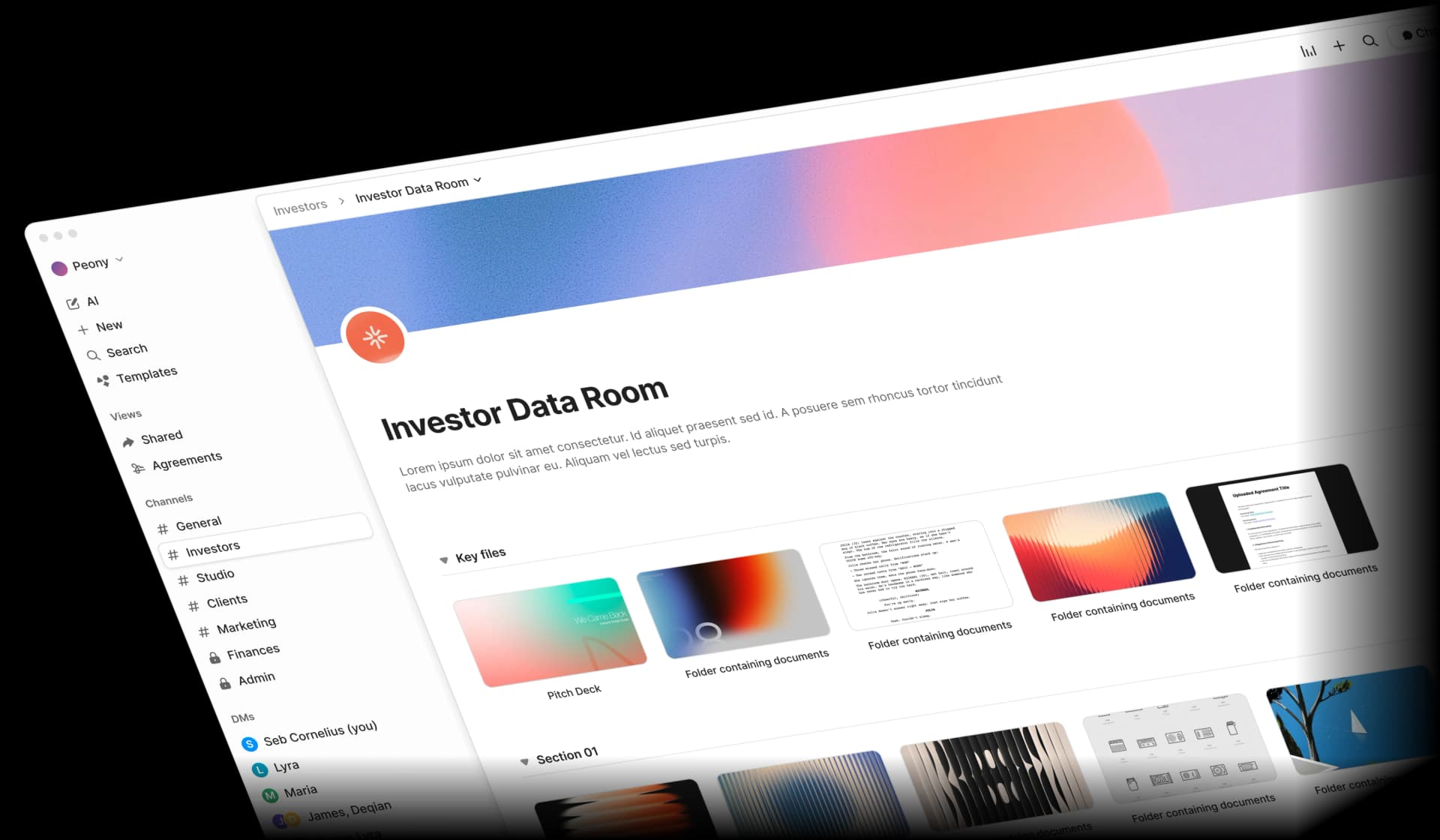
Peony solves this. Set up a branded data room in under 5 minutes — AI auto-indexing organizes your pitch deck, financials, and cap table automatically. Then share with personalized links for each VC.
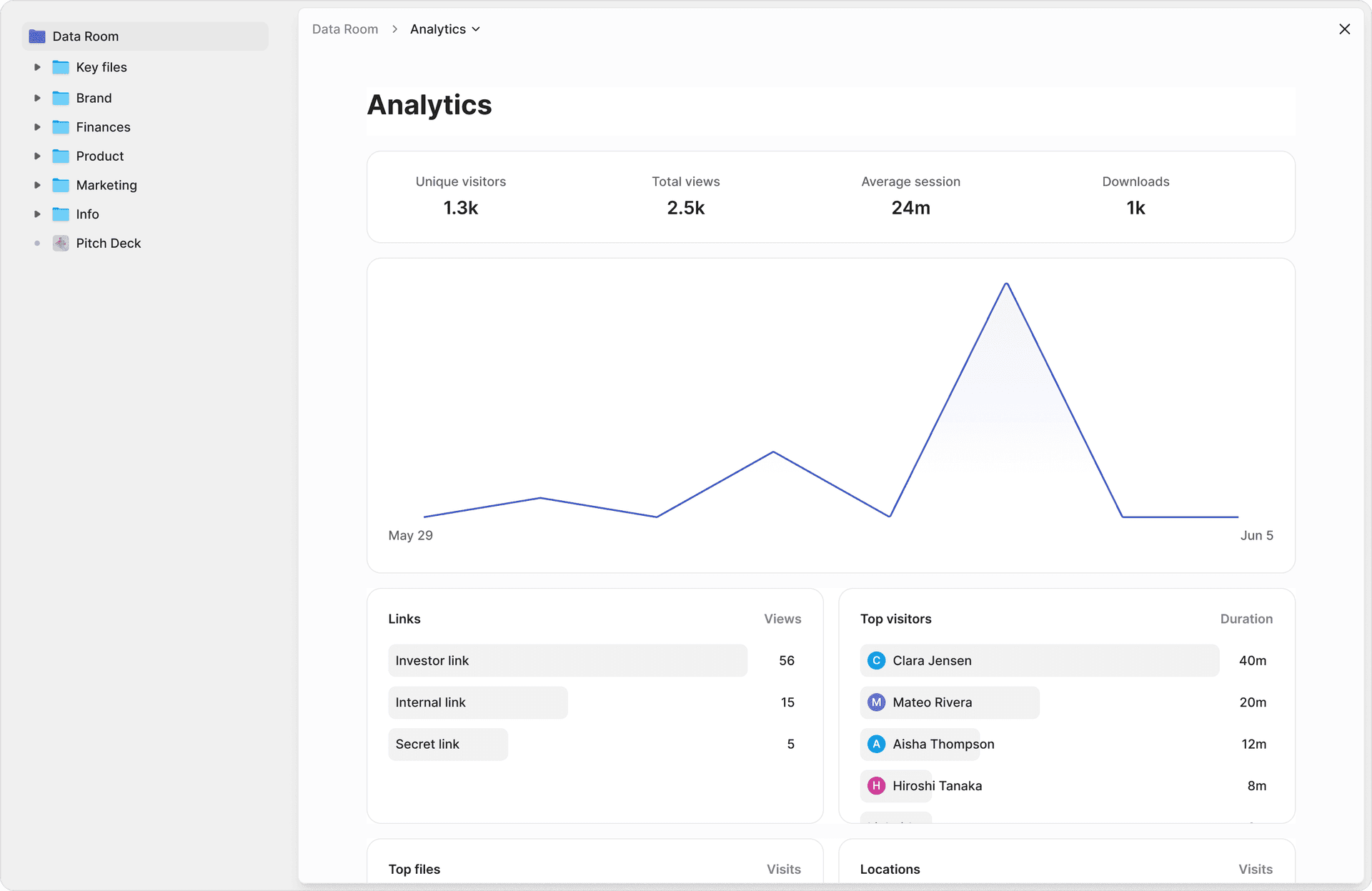
The difference: page-level analytics show you which pages each investor read and how long they spent on each one. You will know if Partner A spent 8 minutes on your revenue projections and skipped your team slide — or if they forwarded your deck to two colleagues. That signal tells you where to follow up and who is genuinely interested.
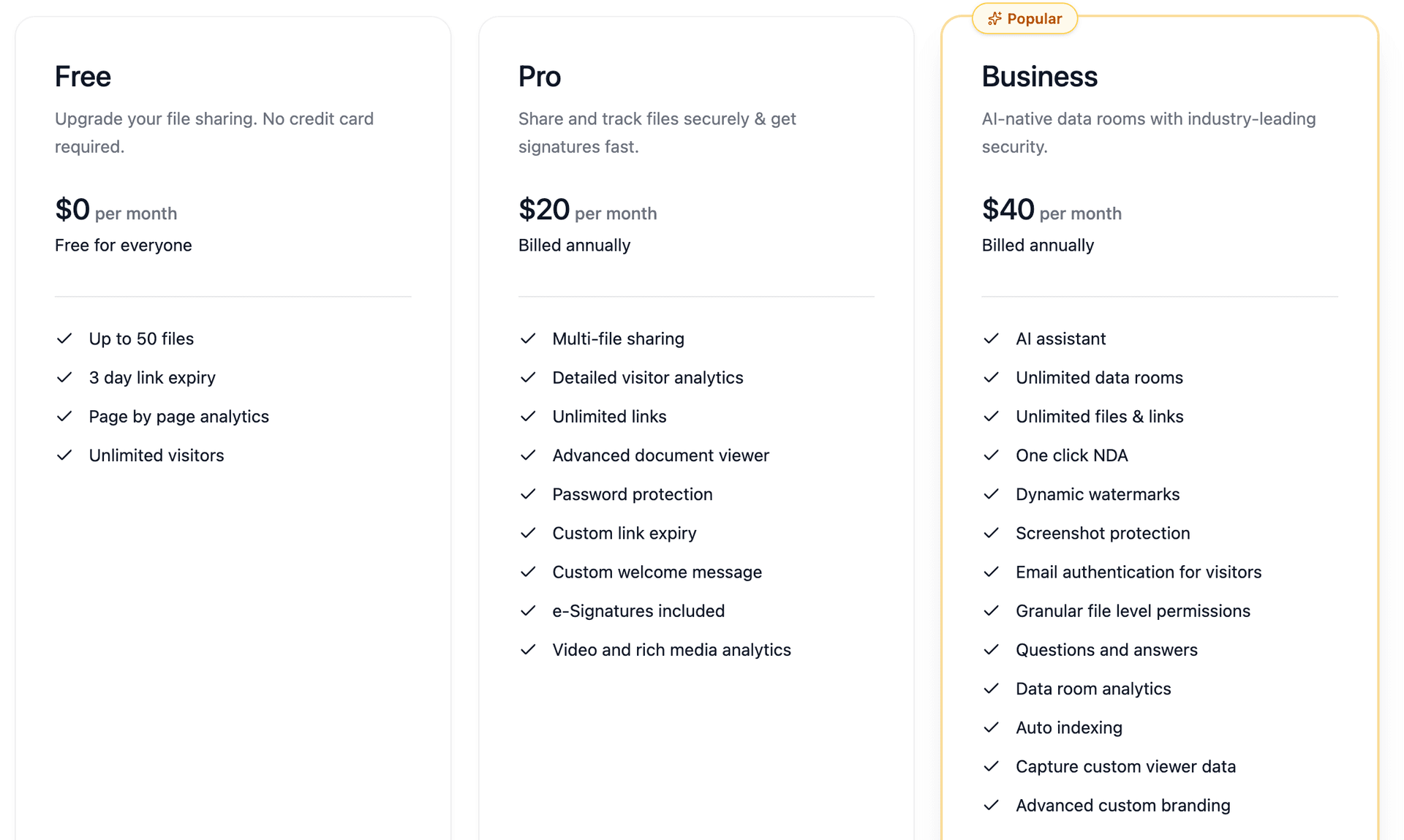
Security matters when sharing financials with dozens of VCs: screenshot protection blocks and logs attempts, dynamic watermarks embed viewer identity into every rendered frame, and NDA gates require signatures before access. Peony starts free ($0), with Pro at $20/admin/month and Business at $40/admin/month. Check out Peony for fundraising or Peony for venture capital.
What are the best Y Combinator alternatives in 2026?
The best Y Combinator alternatives in 2026 are Techstars, South Park Commons, Antler, 500 Global, and Seedcamp — each one matches or beats YC on a specific dimension below. YC remains the gold standard, but its 1.5–2% acceptance rate (the tightest end of the 1-3% acceptance funnel) means most founders need alternatives. These accelerators match or beat YC on specific dimensions:
Higher funding: South Park Commons ($1M per founder — $400K for 7% + $600K guaranteed) and SOSV/IndieBio (up to $525K) both offer more capital than YC's $500K total — SPC at the pre-idea stage, IndieBio with wet lab infrastructure included.
Lower dilution: Plug and Play (0% equity), MassChallenge (0% equity, up to CHF 1M in prizes), and Creative Destruction Lab (0% equity, 16 global sites) provide acceleration without giving up ownership. Capital Factory takes just 1%.
Matching deal structure: Techstars now mirrors YC's deal with $220K for 5% plus an uncapped MFN SAFE. Antler offers $250K for ~9% in the US with a co-founder matching model YC does not provide.
Sector specialists: For biotech, SOSV/IndieBio provides $250K plus BSL-2 wet labs — something YC cannot offer. For enterprise B2B, Alchemist's corporate buyer network converts to revenue faster than YC's generalist approach. For European founders, Seedcamp (5 unicorns including Wise and Revolut) provides deeper regional networks.
Geographic reach: 500 Global operates across 80+ countries, Startupbootcamp runs industry-specific programs across Europe, Asia, and Africa, and Antler has hubs from Singapore to San Francisco — all offering localized support that YC's SF-only model cannot. For US seed investors beyond the accelerator route, we maintain a separate directory.
Founders applying to multiple programs use Peony (free, $0) to organize application materials in branded data rooms and track which reviewers engage with their pitch decks via page-level analytics.
How do you get accepted to a top startup accelerator?
Five tactics consistently move applicants through the 1-3% acceptance funnel: show traction over ideas, prove program fit, apply to multiple programs, prepare professional materials, and leverage the alumni network before applying. Each is detailed below.
1. Show Traction Over Ideas
Top programs accept 1–3% of applicants. Even at the idea stage, show signal: letters of intent, waitlists, prototype usage data, or domain expertise that makes you uniquely positioned. YC's application is famously short — every word matters.
2. Know Why THIS Accelerator
Generic applications fail. If you are applying to Alchemist, show enterprise customers. If it is IndieBio, bring lab data. If it is Plug and Play, name the corporate partners you want to work with. Specificity signals seriousness.
3. Apply to Multiple Programs
Apply to 3–5 programs that match your stage and sector. With the 1-3% acceptance funnel at every top program, applying to a single accelerator is a bet against the odds. Different accelerators have different strengths — diversify your approach using the four-axis selection matrix above (stage, sector, geography, equity).
4. Prepare Professional Materials
Organize your pitch deck, financials, and product demo in a clean, shareable format. Use Peony (free, $0) to create branded data rooms that let you track engagement — you will see which reviewers open your materials and how long they spend on each page. Learn more about how to send pitch decks to investors and how to track pitch deck engagement.
5. Leverage the Alumni Network Before Applying
Reach out to current participants and recent alumni. Accelerators value warm referrals. Ask alumni about their honest experience and whether the program fits your specific needs. A warm intro from an alum can meaningfully improve your odds.
What trends are shaping startup accelerators in 2026?
Four structural trends define the 2026 accelerator landscape: AI as the default category, deal-term convergence at the top, accelerated geographic expansion, and the rise of corporate-backed programs. Each is detailed below.
AI Is Now the Default Category
Roughly 60% of YC's 2026 batches are AI companies, up from 40% in 2024. Station F launched F/ai — the first all-AI accelerator backed by OpenAI, Anthropic, Google, Meta, Microsoft, and Mistral (the first time all major AI labs are participating in a single accelerator program). Antler reports Gen Z founders (25-year-olds) are leading AI unicorn creation. If you are building anything adjacent to AI, accelerator interest is at an all-time high.
Deal Terms Are Converging
Deal-term convergence is reshaping the top of the market. Techstars matched YC's SAFE-based structure in 2025. Antler doubled its Nordic terms. South Park Commons entered at $1M per founder ($400K for 7% + $600K guaranteed). The standard deal for a top-10 accelerator now sits at $150K–$500K for 5–9% equity, with uncapped MFN SAFEs increasingly standard alongside fixed equity — the clearest signal yet that deal-term convergence has hit the global top tier.
Geography Is Expanding
CDL expanded to 16 sites across 10 countries. Plug and Play added 9 new locations. Multiple accelerators entered the Middle East (500 Global Sanabil, Alchemist Doha, CDL-Doha). The days of accelerators being a purely Silicon Valley phenomenon are over.
Corporate-Backed Programs Are Growing
Plug and Play collaborates with 550+ corporate partners. Founders Factory partners with L'Oreal, Aviva, Reckitt, and Northwestern Medicine. Wayra integrates 200+ startups with Telefonica operations. For B2B startups, corporate-backed accelerators offer something VCs cannot: direct customer access.
Frequently Asked Questions
What are the best startup accelerators in the world in 2026?
The top startup accelerators in 2026 are Y Combinator ($500K for 7%, 82 unicorns, $600B+ portfolio valuation), Techstars ($220K for 5%, 4,000+ alumni at $120B+ valuation), 500 Global ($150K for 6%, $2.2B AUM across 80+ countries), Plug and Play (zero equity, 550+ corporate partners, 35 unicorns), Antler ($250K for ~9% in the US, $1B+ global capital, 2 unicorns), and Seedcamp (up to $1M, 5 unicorns including Wise and Revolut). Founders applying to these accelerators use Peony (free, $0) to share pitch decks and financials in branded data rooms with page-level analytics that show which reviewers engaged with each section.
How much funding do startup accelerators provide in 2026?
Accelerator funding ranges from $0 (equity-free programs like MassChallenge, Plug and Play, and CDL) to $1M (South Park Commons Founder Fellowship, structured as $400K upfront for 7% plus $600K guaranteed in your next round). The standard deal has converged: Y Combinator offers $500K for 7% equity, and Techstars now matches with $220K for 5% plus an uncapped MFN SAFE. Other ranges include Seedcamp ($350K-$1M), SOSV/IndieBio (up to $550K for 6-9%), Antler ($250K for ~9% in the US), Berkeley SkyDeck ($200K for 7.5%), and 500 Global ($150K for 6%). Peony (free, $0) helps founders organize application materials and financial models in secure data rooms with engagement tracking.
What is the acceptance rate for top accelerators?
Top accelerator acceptance rates range from 1-3% for the most competitive programs. Y Combinator accepts 1.5-2% of applicants (20,000-25,000 applications per batch), Techstars accepts 1-3%, and 500 Global's Flagship accepts roughly 1.5% (30-40 companies per batch from thousands of applications). Startupbootcamp reports approximately 1% acceptance. Founders who organize professional application materials in a Peony (free, $0) data room with branded sharing and page-level analytics demonstrate the operational maturity that top accelerators look for.
Which accelerators take zero equity from startups?
Several top accelerators take zero equity: MassChallenge (equity-free with up to CHF 1M in prizes), Plug and Play Tech Center (zero equity for program participation, optional investment via PnP Ventures), Creative Destruction Lab (non-profit, zero-fee, zero-equity mentorship across 16 global sites), and Station F's F/ai program (zero equity, AI-focused, backed by OpenAI, Anthropic, Google, Meta, Microsoft, and Mistral). Dreamit Ventures has a unique deferred model where equity is not taken until the startup's Series A. Founders in these programs use Peony (free, $0) to share data rooms with investors they meet, tracking engagement with page-level analytics.
How do I choose the right startup accelerator?
Match on four dimensions: (1) Stage — pre-idea founders fit Entrepreneur First or Antler, early-product fits YC or Techstars, growth-stage fits Plug and Play or Wayra. (2) Sector — biotech founders should consider SOSV/IndieBio ($550K, wet labs), AI founders should look at Station F's F/ai or YC (60% AI in 2026 batches), deep tech fits CDL or Berkeley SkyDeck. (3) Geography — US-based startups have the most options, European founders should consider Seedcamp, Station F, or Antler, and emerging market founders should look at 500 Global or SOSV Orbit. (4) Equity tolerance — if you want zero dilution, choose MassChallenge, Plug and Play, or CDL. Peony (free, $0) helps founders present polished applications in branded data rooms with secure sharing and engagement analytics.
What is the success rate of startup accelerators?
Success rates vary significantly by program and metric. Y Combinator reports an 87% survival rate (vs. roughly 50% industry average at 5 years), and 14 companies in the W26 batch hit $1M ARR by Demo Day — the highest ever for a single cohort. Techstars alumni raise an average of $1M+ in their first post-program round. MassChallenge reports 70% survival and its Switzerland program shows 65%+ post-program fundraising. Berkeley SkyDeck reports 50%+ follow-on funding rate, with 20% of companies reaching $100M+ valuations. Peony (free, $0) helps accelerator graduates manage investor outreach with data rooms that track which VCs engage most during post-program fundraising.
What are the biggest changes in startup accelerators for 2026?
Four major shifts define 2026: (1) AI dominance — roughly 60% of YC's 2026 batches are AI companies, Station F launched F/ai backed by OpenAI, Anthropic, Google, Meta, Microsoft, and Mistral. (2) Deal term convergence — Techstars matched YC's structure with a $220K investment including an uncapped MFN SAFE, and Antler doubled its Nordic terms. (3) Geographic expansion — CDL expanded to 16 sites across 10 countries, Plug and Play added 9 new locations, and multiple accelerators entered the Middle East. (4) South Park Commons entered the market with a $1M Founder Fellowship ($400K for 7% plus $600K guaranteed), setting a new high-water mark for pre-idea funding. Peony (free, $0) helps founders track accelerator applications and share materials through branded data rooms with page-level analytics.
How big is the global startup accelerator market?
The global startup accelerator market is valued at $5.11 billion in 2025 and projected to reach $6.07 billion in 2026, representing an 18.6% compound annual growth rate. By 2030-2033, the market is projected to reach $9.5-$11.9 billion. The top accelerators collectively manage billions: Plug and Play crossed $1B AUM in 2025, 500 Global manages $2.2B, SOSV manages $1.5B, and Antler surpassed $1B in global capital. Y Combinator's 5,668+ alumni companies have a combined valuation exceeding $600 billion. Founders entering these programs use Peony (free, $0) to organize pitch materials in professional data rooms with engagement analytics and secure document sharing.
What are the best Y Combinator alternatives in 2026?
The best Y Combinator alternatives in 2026 are Techstars ($220K for 5% equity, matching YC's SAFE structure), South Park Commons ($1M per founder — $400K for 7% plus $600K guaranteed — the highest pre-idea investment), Antler ($250K for ~9% in the US with co-founder matching), 500 Global ($150K for 6%, 80+ countries), and Seedcamp ($350K-$1M, 5 unicorns including Wise and Revolut). For zero-equity alternatives, consider Plug and Play (550+ corporate partners), MassChallenge (up to CHF 1M in prizes), and Creative Destruction Lab (16 global sites). Founders applying to multiple accelerators use Peony (free, $0) to organize pitch decks and financials in branded data rooms with page-level analytics showing which reviewers engage with each section.
How long are startup accelerator programs?
Most top startup accelerator programs run 3 months (12-13 weeks). Y Combinator's batches are 12 weeks plus Demo Day, Techstars runs 3 months across 6+ cities, 500 Global's Flagship Accelerator is 4 months, and MassChallenge runs 4 months. Longer-format programs include Creative Destruction Lab at 9 months (5 in-person sessions across the academic year), Alchemist at 6 months for enterprise/B2B, and Entrepreneur First's two-phase model (12 weeks FORM phase plus 12 weeks LAUNCH phase in San Francisco). South Park Commons' Founder Fellowship bootcamp runs late March to late May (roughly 8 weeks) followed by ongoing community access. Most programs require in-person participation for at least the core weeks. Founders preparing for Demo Day use Peony (free, $0) to organize pitch decks and financials in branded data rooms with page-level analytics showing which reviewers engaged with each section.
Related Resources
Accelerator Guides by Region
- Top Startup Accelerators in Austin
- Top Startup Accelerators in Boston
- Top Startup Accelerators in Colorado
- Top Startup Accelerators in India
- Top Startup Accelerators in San Francisco
- Top Startup Accelerators in China
- Top Canadian Startup Accelerators
- Top UK Startup Accelerators
Accelerator Guides by Sector
- Top AI Startup Accelerators
- Top Healthcare Startup Accelerators
- Top Biotech Startup Accelerators
- Hardware Accelerators
- Top Blockchain Startup Accelerators
- Top Crypto Startup Accelerators
- Accelerator vs Incubator: Which Path Is Right?