
12 Active New Zealand Investors in 2026 (Check Sizes + Intro Paths)

Co-founder at Peony. Former M&A at Nomura, early-stage VC at Backed VC, and growth-equity / secondaries investor at Target Global. I write about investors, fundraising, and deal advisors from the deal-side perspective I spent years in.
TL;DR — NZ startup investors in 2026: Kiwi tech exporters hit NZ$20B revenue in FY2025 (up 9.9%) according to the 2025 TIN Report. NZ startup investment reached NZ$361.7M in H1 2025, up 186% YoY. Icehouse Ventures closed Seed Fund IV at NZ$70M (from a NZ$30M target). Outset Ventures closed Fund II at NZ$41.5M. Pacific Channel now manages NZ$125M+ AUM across NZ and Australia. Blackbird runs a dedicated NZ$75M NZ seed fund. The dry powder is there — but only 21% of H1 2025 deals went to genuinely new companies, so investor selectivity is real. Here are the 12 NZ pre-seed investors actually writing cheques in 2026, their sweet spots, and how to approach each one.
Last updated: April 2026
I spent two years at Backed VC and Target Global watching trans-Tasman rounds close (or stall) across every stage — from K1W1's family-office cheques up to Icehouse's Seed Fund IV institutional rounds. Kiwi founders underestimate how tight the NZ investor community is: warm intros compound, signal from the right anchor makes your round 3x easier, and a botched first meeting with Icehouse can close doors at Outset and Blackbird NZ within a week. The founders who raise cleanly always do the same thing — they build a target list of 12-20 genuinely matched funds, run a tight process, and show up with materials ready.
This guide is for that group. These are the 12 NZ investors actually writing cheques in 2026 — covering angel, pre-seed, seed, and early Series A — with current fund sizes, typical check bands, 2025-2026 portfolio signals, and how to pitch each one. No filler firms, no inactive funds, no generic "ANZ VCs."
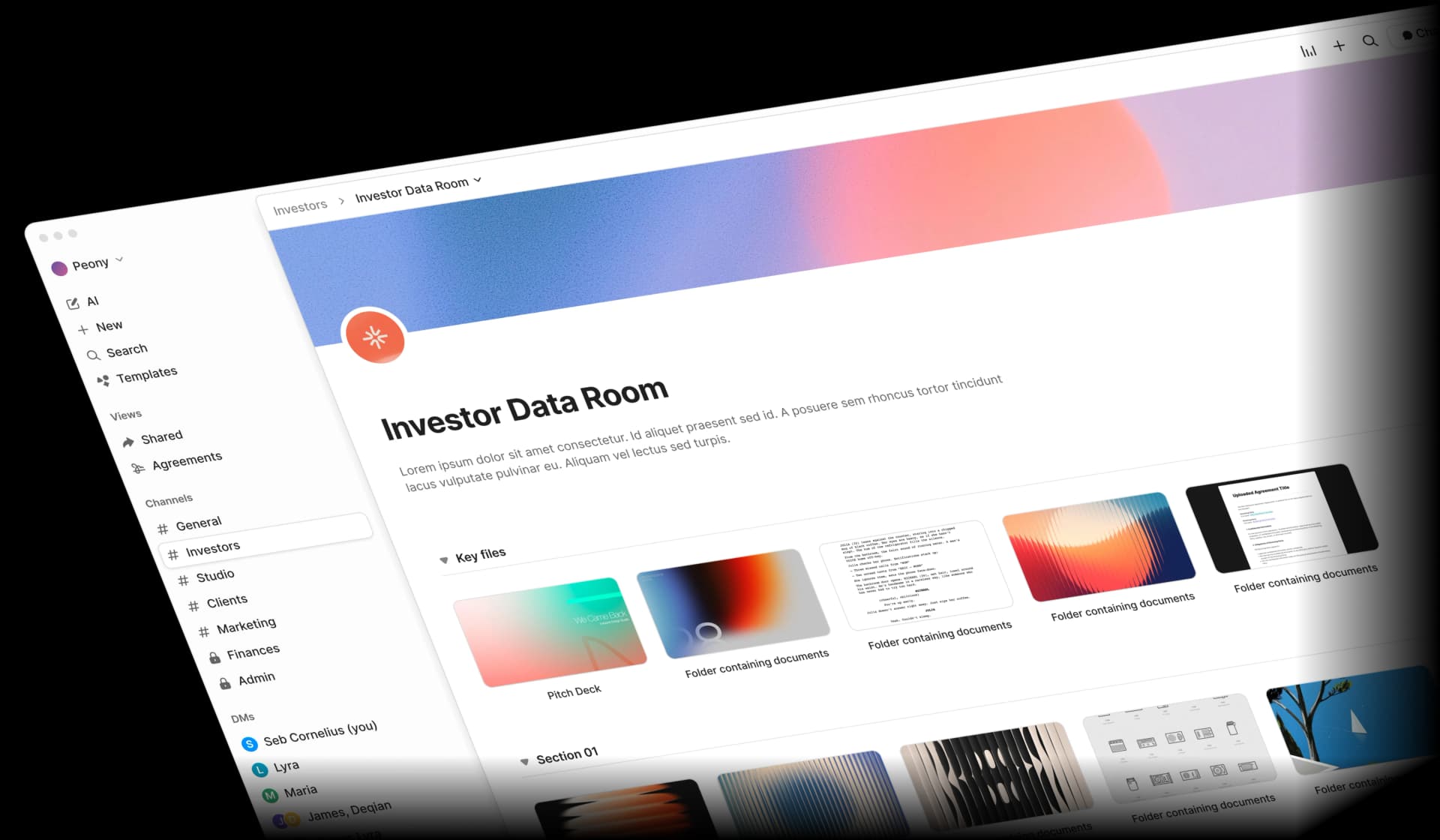
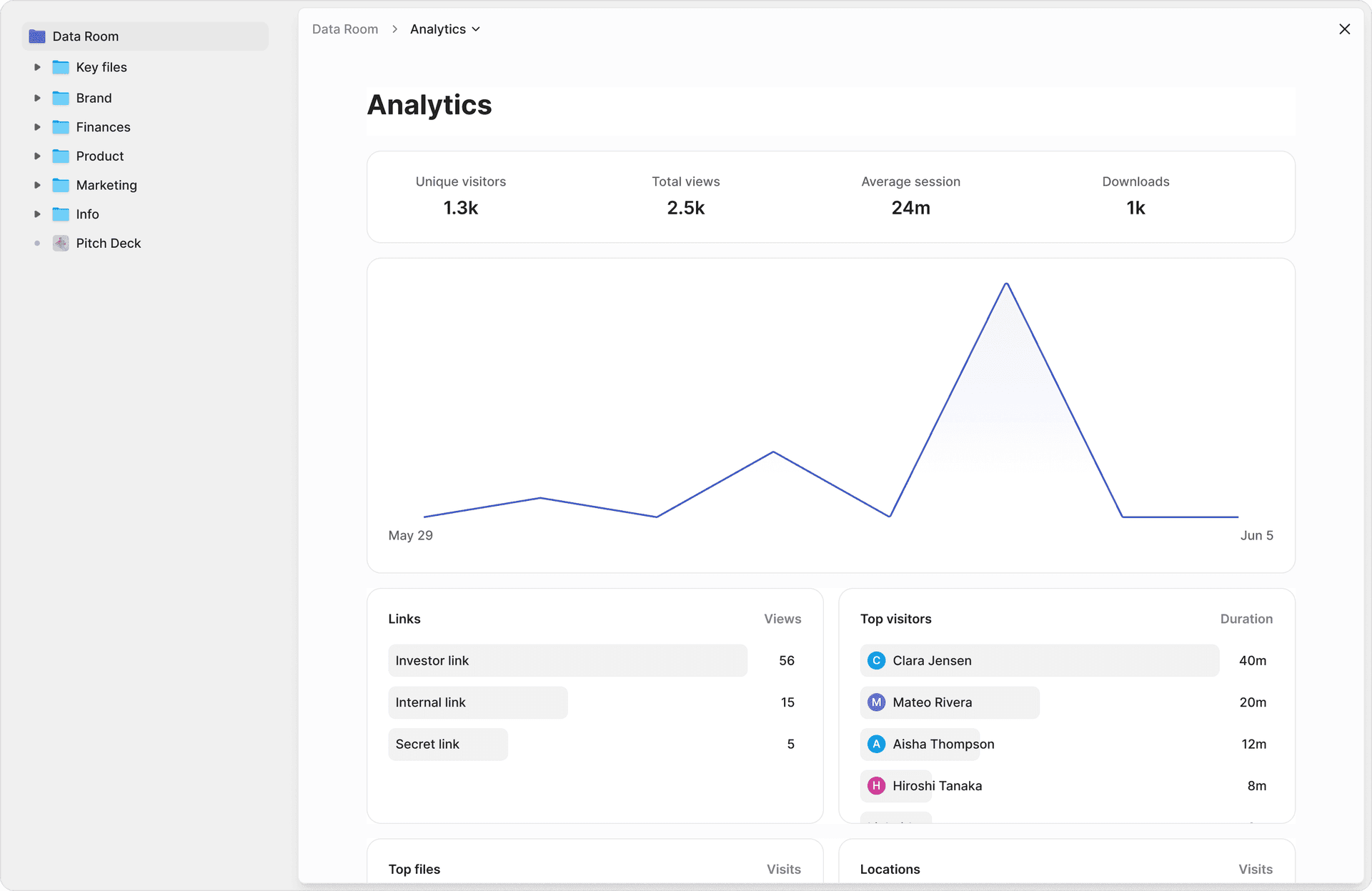
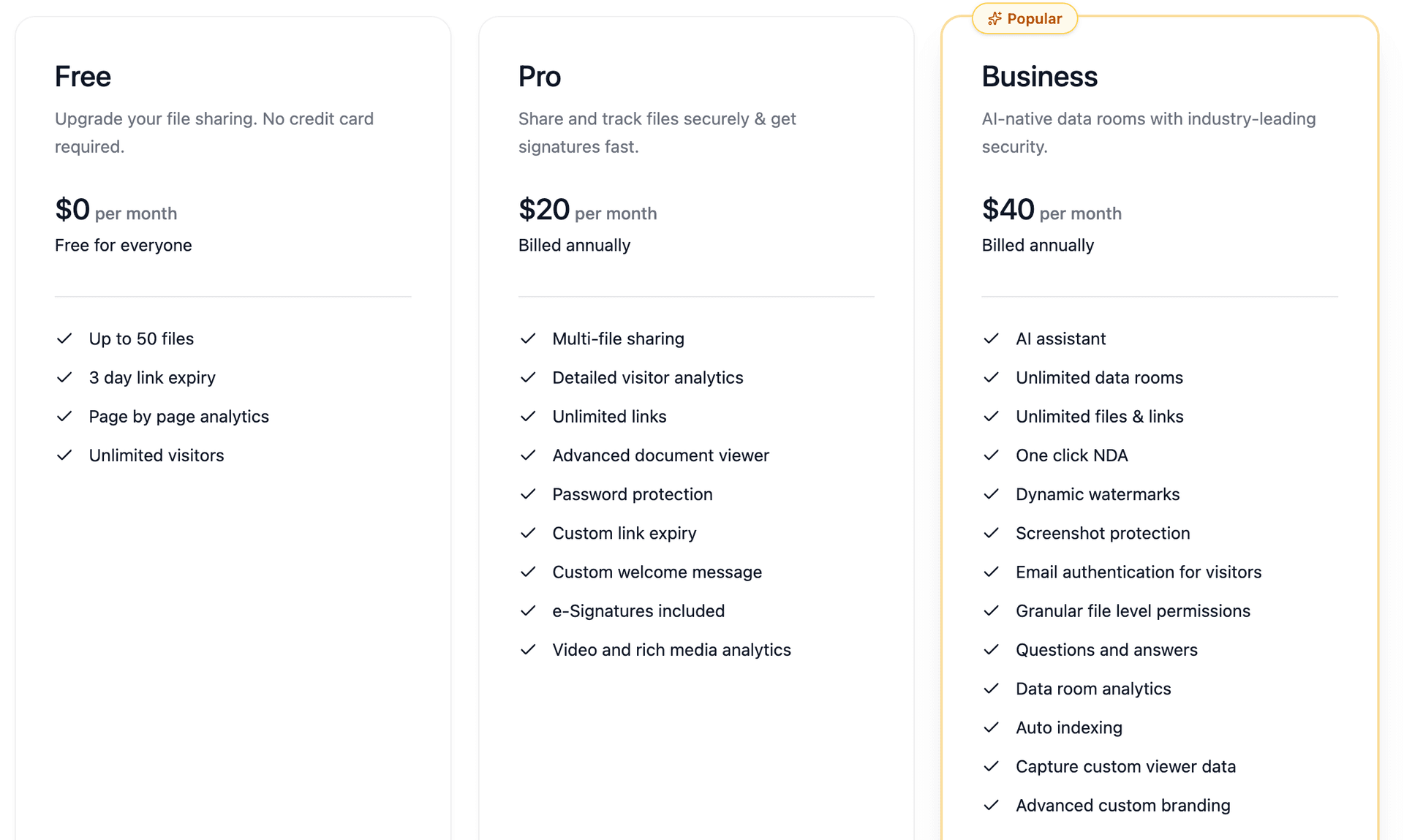
Before you start outreach, have your data room ready. NZ pre-seed rounds can close in 4-8 weeks, but only if you respond to every follow-up within hours — not days. Peony Business at $40/admin/month gives you everything a Kiwi raise actually needs: NDA gates on each fund link, dynamic watermarks tied to each partner's email, page-level analytics showing which partners read your financials versus skipped them, screenshot protection for sensitive valuation data, and AI-powered Q&A that drafts answers with page citations. Unlike Datasite or Intralinks which charge thousands per deal, Peony scales from a simple deck share to a full Series A process without switching platforms.
1. How to pick the right NZ pre-seed investors in 2026
A. Decide what "pre-seed" means for you
In NZ in 2026, "pre-seed" usually maps to one of three buckets:
- Proof-of-concept / first prototype — you are de-risking technical feasibility (NZGCP Aspire, Matū, Outset)
- Early traction — first users, pilot customers, or early revenue (Icehouse, Blackbird NZ, Hillfarrance)
- Deep-tech formation — science, IP, and commercialisation plan (Pacific Channel, Outset, Matū)
Your bucket determines which fundraising data room structure makes sense and which investors belong on your list.
B. Match by sector (this is where most Kiwi founders get it wrong)
| Sector | Your strongest 2026 NZ pre-seed fits |
|---|---|
| B2B SaaS / fintech / enterprise | Icehouse, Blackbird NZ, Hillfarrance, ICE Angels, Sparkbox |
| Deep tech / advanced manufacturing / aerospace | Outset, Pacific Channel, Matū, NZGCP Aspire |
| AI-first / media / gaming | Hillfarrance, Icehouse, Blackbird NZ, K1W1 |
| Climate / agritech / food / health | Pacific Channel, Outset, Matū, NZGCP Aspire |
| Consumer / marketplace | Icehouse, Blackbird NZ, ICE Angels, K1W1 |
The closer the sector match, the less you need to educate the partner — and the faster your round closes.
C. Pick the "capital + help" package you actually need
Ask yourself honestly: is your biggest bottleneck capital, distribution, hiring, trans-Tasman/global expansion, or scientific/technical risk? Then match:
- Capital only (fast) — ICE Angels, AngelHQ, Sparkbox
- Capital + operator help — Hillfarrance, Blackbird NZ, Icehouse
- Capital + deep-tech commercialisation — Pacific Channel, Outset, Matū
- Capital + Crown credibility / follow-on pathway — NZGCP Aspire
- Capital + family-office ballast — K1W1
D. Signal compounds in NZ — get your anchor right
Icehouse, Blackbird NZ, Outset, and Pacific Channel are most often used as anchor credibility for NZ rounds. The right anchor can 3x your close rate with follow-on angels and make trans-Tasman conversations with Australian VCs dramatically easier.
2. The 12 NZ pre-seed investors actually writing cheques in 2026
1. Icehouse Ventures (Auckland) — the default first call for most Kiwi founders
Why they matter: Icehouse Ventures is New Zealand's most active early-stage VC, with NZ$630M+ invested across 375+ portfolio companies as of January 2026. They invest from pre-seed through to pre-IPO, meaning they can support you for the life of your company. (Icehouse Ventures)
2025-2026 fund signal: In late 2025, Icehouse closed Seed Fund IV at a record NZ$70M, up from an original NZ$30M target — raised from 363 investors, 80% New Zealand-based, with 17 international LPs from the US, China, Singapore, India, and Germany contributing NZ$22M combined. 147 investors had backed prior seed funds, with 26 having invested in all four. Seed Fund I investors have seen more than 2x returned with the remaining holding worth 5.7x. (RNZ)
Check size: NZ$100K for a first round up to NZ$10M+ in later rounds.
Best for: B2B SaaS, fintech, consumer, marketplaces, and broadly "venture-scale" companies launching globally from NZ.
How to approach: Warm intro through a founder they have backed or an operator in their network. Share a tight memo plus metrics plus product demo — they see high deal volume so clarity wins. Be explicit about round structure (target amount, lead vs syndicate, timeline).
2. Blackbird Ventures NZ (Auckland, trans-Tasman) — the ANZ heavyweight
Who they are: Blackbird is one of ANZ's largest venture platforms. They run a dedicated NZ$75M NZ fund (roughly USD$44M) for pre-seed and seed, separate from their Australian funds and their Follow-On Fund for scaling companies. As of 2025 their portfolio is worth USD$9.9B with a net IRR of 36.09% across all funds. In 2025 they made 51 new investments out of 1,900 applications and 423 meetings. (Blackbird)
Check size: Pre-seed to seed, typically NZ$250K-NZ$3M as a co-lead or lead.
Best for: Ambitious tech companies building category-defining products with trans-Tasman or global scale from day one. Their NZ portfolio has included Halter, Tracksuit, and others in the NZ unicorn pipeline.
How to approach: Blackbird explicitly asks for "Wild Hearts" — founders attacking massive categories. Lead with vision, conviction, and evidence of speed. They host Collisions events in Auckland — attend one if you can.
3. Outset Ventures (Auckland) — best-in-class for deep-tech pre-seed
Why they matter: Outset explicitly does pre-seed, seed, and Series A, leading rounds NZ$100K-NZ$3M. In May 2025 they closed Fund II at NZ$41.5M (oversubscribed), with roughly two-thirds from local institutional/private sources and the remainder from international HNW individuals relocating to NZ. NZGCP Elevate contributed NZ$15M. (Outset Ventures)
Portfolio signal: Fund II has already backed OpenStar Technologies, Ternary Kinetics, E Leviate, Zincovery, and Kelvius — which have raised nearly NZ$70M combined. Halter, an Outset portfolio company since early-stage, became a unicorn in 2025 — proving the thesis of patient deep-tech capital. Latest Fund II investment: Aurogenic (January 2026). (Startup Daily)
Focus: Resource recovery/circular economy, energy & advanced manufacturing (fusion, thermochemical storage, decarbonisation), autonomy & sovereign capability (robotics, dual-use systems), and industrial technologies.
Best for: Deep tech where startup risk is technical plus commercialisation — not distribution.
How to approach: Plain-language technical thesis. Map 12-18 months of milestones to funding needs. Bring commercialisation logic early (who buys, why, how you reach them).
4. Pacific Channel (Auckland, Sydney) — deep-tech specialist with a pre-seed-to-Series-A mandate
Who they are: Pacific Channel is NZ's dedicated deep-tech VC, now managing NZ$125M+ AUM across Fund III and a newer Australian Fund IV launched 2025. Focus areas: future of health, future of food, sustainability. Elevate NZ backed Fund III with NZ$10M in May 2025. (Pacific Channel)
Portfolio includes: Vortex Power Systems, Orbica, Cetogenix, InsituGen, Kitea Health, and agritech company Bovonic.
Check size: Pre-seed through Series A, typically NZ$250K-NZ$3M at pre-seed with follow-on capacity into later rounds.
Best for: Deep-tech companies that need specialist support plus funding continuity from early experiments into a credible Series A story — especially in health, agri/food, and environmental tech.
How to approach: Show your de-risking plan and what the pre-seed cheque proves. Be explicit about success at 6/12/18 months. Tie into NZ's deep-tech ecosystem programs and Callaghan Innovation where relevant.
5. K1W1 (Auckland) — Sir Stephen Tindall's family office
Who they are: K1W1 is the family office of Sir Stephen Tindall (founder of The Warehouse Group) with NZ$100M+ deployed into NZ early-stage startups across diverse industries. They co-invest frequently with Icehouse, Blackbird NZ, and other leads. Made 4 investments in the trailing 12 months as of January 2026. (Icehouse Ventures — K1W1)
Check size: Angel-style to Series A, variable based on deal specifics. Often a co-investor rather than a lead.
Best for: Founders who already have an institutional lead and want family-office ballast with long-term alignment. K1W1 adds credibility signal without the process overhead of a new fund.
How to approach: Typically accessed via co-investor introductions (Icehouse portfolio founders, Blackbird NZ partners). K1W1 does not run a standardised application process.
6. Hillfarrance Venture Capital (Auckland) — AI-first operator VC
Who they are: Hillfarrance is a NZ$36M early-stage fund investing in audacious Kiwi founders at pre-seed and seed, with a focus on AI, media/gaming, SaaS, and climate. They run a founder-aligned model, sharing a portion of returns with co-founders of portfolio companies. (Hillfarrance)
Check size: NZ$1M-NZ$6M across pre-seed to NZ-style Series A bridging.
Best for: AI-first founders, advanced enterprise SaaS, media/gaming, and climate — especially teams that want operator support beyond just capital.
How to approach: Warm intro through the Auckland ecosystem or Callaghan Innovation. Bring a clear AI/defensibility story — they filter hard on technical edge.
7. Matū (Auckland) — science and deep-tech pre-seed specialist
Who they are: Matū runs venture funds focused on NZ science and deep-tech startup opportunities at the earliest stages. They review 250+ investment opportunities a year and invest at pre-seed and seed specifically. Matū Iramoe is their retail-accessible vehicle that issues ordinary shares to fund deep-tech investments. (Matū)
Check size: Small pre-seed tickets, typically NZ$100K-NZ$500K, often as part of a syndicate.
Best for: University spinouts, science-heavy teams, and deep-tech founders who need a specialist investor willing to back IP-rich early-stage opportunities.
How to approach: Apply directly via matu.co.nz or get intros through university commercialisation offices (Auckland, Otago, Canterbury).
8. NZGCP Aspire NZ Seed Fund (Wellington) — Crown-owned, proof-of-concept through early expansion
Who they are: NZ Growth Capital Partners is the Crown-owned entity running the Aspire NZ Seed Fund, which invests directly at proof-of-concept, seed, and early expansion stages. Aspire has an explicit weighting toward deep-tech areas (agri/food, clean-tech, life sciences, space, AI/ML) and under-served sectors. NZGCP also backs other NZ VCs via its Elevate NZ Venture Fund (NZ$15M into Outset Fund II, NZ$45M into GD1 Fund III, NZ$10M into Pacific Channel Fund III). (NZGCP)
Check size: Proof-of-concept to seed, typically NZ$250K-NZ$1M as co-investor alongside private VCs.
Best for: Founders earlier than traditional seed (POC/prototype) who need credible first institutional capital, especially in deep tech. Aspire often co-invests with the other funds on this list.
How to approach: Apply via nzgcp.co.nz — expect a structured process. A clear plan from idea to validated prototype to fundable traction matters. Explain broader ecosystem leverage (universities, labs, export pathways).
9. ICE Angels (Auckland) — the largest NZ angel network
Who they are: ICE Angels is New Zealand's largest angel network with 150+ members and NZ$65M+ invested across 100+ companies since 2003. Managed by Icehouse Ventures, so ICE Angels deals often flow into or alongside Icehouse seed funds. (Angel Association)
Check size: Individual angel cheques typically NZ$25K-NZ$250K, aggregating to NZ$300K-NZ$1.5M syndicate rounds.
Best for: Pre-seed software, early marketplaces, consumer, fintech, and "first version is live" businesses that need smart money plus early believers.
How to approach: Warm intros from NZ ecosystem people. Keep the round easy to join (clear terms, tidy data room, fast answers). Have pilot-customer references ready.
10. AngelHQ (Wellington) — the Wellington angel hub
Who they are: AngelHQ is an established Wellington-based angel group with about 30 investors across early-stage companies, primarily in the lower North Island.
Check size: Individual cheques typically NZ$10K-NZ$100K, syndicates NZ$150K-NZ$500K.
Best for: Wellington-region founders or any NZ founder wanting a local angel anchor alongside Auckland-based leads. Particularly strong for govtech and public-sector-adjacent startups given Wellington's government-sector density.
How to approach: Apply via angelhq.co.nz or get intros through Creative HQ and other Wellington ecosystem players.
11. Sparkbox Ventures (Auckland) — NZ's most active seed-stage angel syndicator
Who they are: Founded in 2001, Sparkbox is one of NZ's most active seed-stage investors. They run the Global from Day One Seed Fund in partnership with the Icehouse business growth centre. (Sparkbox Ventures)
Focus sectors: IT, mobile, materials science, cleantech, communications, medical and diagnostic technology, internet/cloud.
Check size: Pre-seed angel syndicate cheques.
Best for: Early-stage founders who want a syndicated angel process with consistent deal flow rather than a single-check institutional lead.
How to approach: Apply directly via sparkboxventures.com.
12. Nuance Connected Capital (Auckland) — global-ambition seed VC
Who they are: Nuance Connected Capital connects NZ entrepreneurs with the resources and knowledge to take their business global. Recent portfolio activity (2025-2026) includes Swyftx's acquisition of Easy Crypto and the acquisition of Quantifi Photonics — evidence of real exits in the portfolio. (Nuance)
Check size: Pre-seed to seed, variable based on deal.
Best for: NZ founders with explicit global ambition (especially trans-Tasman, Southeast Asian, or US market entry) who want a VC wired into international networks.
How to approach: Apply via nuance.vc or warm intro through portfolio founders.
3. Quick-guide comparison table
| Situation | Your best NZ pre-seed match(es) | Why |
|---|---|---|
| SaaS, Auckland, NZ$500K raise | Icehouse → Blackbird NZ → ICE Angels | Default first-call anchors plus fastest syndicate fill |
| Deep-tech medtech, Dunedin | Outset → Pacific Channel → NZGCP Aspire | Science-friendly, explicit medtech mandate, patient capital |
| Climate-tech, Wellington | Outset → Matū → AngelHQ | NZ$41.5M Fund II dry powder, deep-tech spec, local angels |
| AI-first, global ambition | Hillfarrance → Blackbird NZ → Nuance | AI focus, trans-Tasman reach, global-by-design |
| University spinout with IP | Matū → Pacific Channel → NZGCP Aspire | Science thesis, pre-seed science tickets, Crown credibility |
| Consumer / marketplace | Icehouse → ICE Angels → K1W1 | Brand muscle, fastest syndicate, family-office ballast |
| Govtech, Wellington | AngelHQ → NZGCP Aspire → Icehouse | Local angel network, public-sector familiarity |
| Trans-Tasman from day one | Blackbird NZ → Pacific Channel → Icehouse | Dedicated NZ fund, Australian Fund IV, international LPs |
4. How to pitch NZ investors from overseas in 2026
If you are not NZ-based but have a Kiwi co-founder or are relocating:
- Lead with why NZ specifically unlocks your story. Talent density (Rocket Lab, Xero, Halter as precedents), research IP (Auckland, Otago, Canterbury universities), Southeast Asian market access, or trans-Tasman go-to-market. "We are in NZ because it is cheap" is not a reason — "we are in NZ because our CTO came out of the Auckland Bioengineering Institute and we need access to that IP" is.
- Use the right door. Icehouse, Blackbird NZ, and Pacific Channel all have international LPs and overseas portfolio experience. Matū and Outset are more NZ-rooted but welcome returning expats. K1W1 is usually accessed through other investors — not cold.
- Time zones matter. NZT is ~20 hours ahead of PST. Your first-meeting availability matters — Kiwi partners appreciate founders who block 7am calls (their time) to match US evenings. Do not expect a 9-5 NZT window to get answers from an LA-based VC.
- Have your data room in one place. Overseas founders lose more rounds to disorganised follow-up than to weak pitches. A Peony Business data room at $40/admin/month lets you share one link per fund with page-level analytics, so you know who is engaging and can prioritise follow-ups across time zones.
5. Five quick tips for pitching NZ pre-seed investors (that actually work)
-
Make your round simple. NZ pre-seed rounds move when terms and structure are clean: clear raise target, clear timeline, and no weird complexity.
-
Lead with the "wedge," not the full vision. Show the smallest product that wins a real customer (or proves a key technical claim), then show how it expands.
-
Be specific about milestones, not vibes. Pre-seed investors fund de-risking. Tell them exactly what you will prove in 3-6 months and 12 months.
-
Use NZ's real strength: speed plus credibility plus global ambition. The best NZ investors love "global from day one" thinking — show how you win internationally from NZ.
-
Have your proof ready in the format they expect. SaaS: retention, pipeline quality, clear ICP. Deep tech: test results, IP plan, regulatory/reimbursement outline. Consumer: repeat rate, CAC payback, margin discipline. Use a professional data room like Peony to organise materials with AI-powered organisation and track investor engagement with page-level analytics.
Why professional data rooms matter for NZ pre-seed fundraising
Kiwi pre-seed startups need to present complex documentation — milestone plans, technical validation, financial projections, IP, and traction data — professionally to build investor confidence in a relationship-driven market where signal compounds fast.
Peony helps NZ startups create investor-ready data rooms with AI-powered organisation that sets up in minutes instead of weeks.
Key benefits for NZ founders:
- Page-level analytics show which documents Icehouse, Blackbird NZ, or Outset partners review most
- NDA gates and dynamic watermarks protect sensitive financial and IP data
- Screenshot protection blocks and logs capture attempts on pitch decks
- AI-powered Q&A routes investor questions through AI-drafted answers with page citations
- Transparent pricing at $40/admin/month for Business tier — a fraction of the NZ$8,000-NZ$30,000 per deal that legacy platforms like Datasite or Intralinks charge
Unlike DocSend which caps analytics on lower tiers, or Google Drive which offers zero investor tracking, Peony Business scales from a simple deck share to full Series A diligence without switching platforms.
Conclusion
Raising pre-seed capital in New Zealand in 2026 requires matching your startup type, stage, and risk profile to the right investors. The 12 on this list are actively deploying cheques — Icehouse closed a record Seed Fund IV at NZ$70M, Outset has fresh NZ$41.5M Fund II powder, Pacific Channel manages NZ$125M+ AUM across NZ and Australia, and Blackbird NZ runs a dedicated NZ$75M fund for Kiwi founders. But they are selective: only 21% of H1 2025 NZ deals went to genuinely new companies. Bring clear milestones, a sharp wedge, and a clean data room — not just vision.
And bring a real data room, not a Google Drive folder. NZ pre-seed rounds can close in 4-8 weeks, but only if your follow-ups are fast and your materials are ready. Peony Business at $40/admin/month gives you everything a Kiwi raise actually needs — NDA gates on every link, dynamic watermarks tied to each partner's email, page-level analytics showing exactly who read your financials versus skipped them, screenshot protection for sensitive valuation data, and AI-powered Q&A with page citations. Unlike Datasite or Intralinks which charge thousands per deal, or Google Drive which gives you zero visibility, Peony scales from a single deck share to full Series A diligence without switching platforms.
Ready to pitch NZ pre-seed investors? Set up your investor data room with Peony in minutes, not weeks.
FAQ
I am a first-time SaaS founder in Auckland raising NZ$500K pre-seed — which Kiwi investors actually write first cheques at that stage?
For a NZ$500K pre-seed SaaS round from Auckland, your strongest starting list is Icehouse Ventures (NZ$100K-NZ$10M+ across 375-plus portfolio companies with the fresh NZ$70M Seed Fund IV), Blackbird Ventures NZ (dedicated NZ$75M pre-seed/seed fund for ANZ, made 51 investments in 2025), Hillfarrance (NZ$36M fund, NZ$1M-NZ$6M tickets for AI/SaaS/media), and ICE Angels (150-plus members, fastest path to close a true pre-seed). K1W1 (Sir Stephen Tindall's family office, NZ$100M+ deployed) often co-invests alongside these leads. For a first-time SaaS founder, Icehouse is usually the anchor and Blackbird NZ provides trans-Tasman credibility. When you open your Peony Business data room at $40/admin/month with NDA gates for each fund, page-level analytics show which partners actually read your retention cohorts versus skimmed the deck — Google Drive gives you zero visibility on that.
I am raising NZ$300K for a climate-tech prototype in Wellington — what check sizes do New Zealand pre-seed investors actually write in 2026?
For a NZ$300K climate-tech raise in Wellington, expect to stitch together one institutional lead plus angel syndicate fill. Icehouse Ventures starts at roughly NZ$100K for a first round. Outset Ventures leads rounds between NZ$100K and NZ$3M and has fresh capital from its NZ$41.5M Fund II closed May 2025 (backed by NZ$15M from NZGCP Elevate). Pacific Channel, now with NZ$125M+ AUM through Fund III and an Australian Fund IV launched 2025, writes pre-seed through Series A cheques with deep-tech focus. Matū targets pre-seed and seed in science and deep tech. Hillfarrance writes NZ$1M-NZ$6M across AI, gaming, and climate. AngelHQ (Wellington-based, about 30 angels) is your local syndicate. For a NZ$300K raise you are likely pairing one lead from Outset or Matū with AngelHQ follow. A Peony Business data room at $40/admin/month costs your founding team roughly NZ$200/month total — far less than what a single dinner with investors costs, and dynamic watermarks tie each page view to the specific investor who opened it, something Dropbox cannot track.
I am a deep-tech founder spinning out of the University of Auckland — how should I approach New Zealand pre-seed investors in 2026?
For a University of Auckland deep-tech spinout, your tightest investor fit in 2026 is Pacific Channel (deep-tech specialist, NZ$125M+ AUM, pre-seed through Series A), Outset Ventures (NZ$41.5M Fund II closed May 2025, backs science and engineering startups including Halter which became a unicorn in 2025), Matū (reviews 250+ deals/year, pre-seed science and deep tech), and NZGCP Aspire NZ Seed Fund (Crown-owned, proof-of-concept through early expansion, explicit deep-tech weighting). Warm intros matter most in NZ — use your commercialisation office, Callaghan Innovation contacts, or portfolio-founder references. Your pitch needs a plain-language technical thesis, a 12-18 month milestone plan mapping funding to de-risking events, and a commercialisation route. Upload your provisional patents, experimental data, and milestone plans into a Peony Business data room where AI auto-indexing organises everything into a professional folder structure in under 3 minutes — which beats emailing loose PDFs through Dropbox where you cannot tell if anyone actually opened your IP documentation.
I am pitching Icehouse Ventures next month for a B2B SaaS pre-seed — what do NZ investors actually expect in a data room in 2026?
For an Icehouse Ventures pre-seed B2B SaaS pitch, your data room needs a tight pitch deck, cap table, incorporation documents, financial model with cohort data, product demo or prototype link, retention and pipeline quality metrics, and a 12-18 month milestone plan. Icehouse sees high deal volume (375-plus portfolio companies) so clarity wins. For SaaS specifically they pressure-test category wedge, founder-market fit, early customer pull, and your ability to raise the next round. NZ seed rounds can close in 4-8 weeks from first meeting — have everything ready on day one. Peony Business at $40/admin/month gives you page-level analytics showing exactly which pages each investor reviewed and for how long, so you can tailor follow-up conversations to what actually caught their attention. Dynamic watermarks trace any forwarded documents back to the specific viewer — a capability DocSend caps on lower tiers and Google Drive lacks entirely.
I am a fintech founder in Christchurch sharing my financial model with three NZ angel groups — how do I securely share my pitch deck?
Never email unprotected financial models to multiple NZ angel groups (ICE Angels, AngelHQ, Enterprise Angels, etc.) simultaneously. Create a single Peony Business data room with separate NDA-gated share links per group so you control who sees what and when. For a 3-person Christchurch fintech team running a competitive fundraise, Peony Business at $40/admin/month gives you identity-bound access that ties every document view to a verified viewer, dynamic watermarks embedding viewer names into every rendered page, screenshot protection that blocks and logs capture attempts, and link expiry with instant access revocation. Legacy platforms like Datasite or Intralinks charge thousands per deal for the same capabilities, and Dropbox shared folders let anyone forward the link without your knowledge. For NZ fintech specifically you may also share regulatory compliance documents — layered access controls let you gate those behind higher-tier NDAs.
I am raising pre-seed in New Zealand — how long does the typical NZ fundraise take from first meeting to close in 2026?
For NZ pre-seed in 2026, expect 4-8 weeks from first meeting to wire for a well-prepared founder targeting the right investors. Angel syndicate rounds through ICE Angels or AngelHQ move faster at 3-6 weeks because individual angels decide quicker than institutional committees. Institutional leads like Icehouse, Blackbird NZ, or Outset typically need 2-3 partner meetings before committing, so budget 6-10 weeks. Trans-Tasman rounds that include Australian LPs can extend 2-3 weeks longer due to coordination. The accelerator is having your materials ready on day one: a clean data room, clear round structure (target amount, lead vs syndicate, timeline), and references from pilot customers or credible advisors. A Peony Business data room at $40/admin/month lets you monitor real-time engagement across all investors, so you can time follow-ups with the most active readers — Google Drive gives you zero visibility into who is actually engaging with your materials.
I am building a medtech device company in Dunedin — which NZ investors specialise in deep-tech and hard science in 2026?
For a Dunedin medtech device company in 2026, four NZ investors have explicit deep-tech mandates covering medtech: Outset Ventures (NZ$41.5M Fund II closed May 2025, science and engineering-based startups including medtech and biotech — portfolio includes Kitea Health), Pacific Channel (NZ$125M+ AUM with health-focus across Fund III/IV, Auckland and now Australia), Matū (pre-seed science and deep-tech, reviews 250+ deals/year), and NZGCP Aspire (Crown-owned, proof-of-concept through early expansion with explicit life-sciences weighting). For medtech they want a credible de-risking plan with milestones unlocking the next round, clear IP and defensibility, and a grounded path from lab to product to scalable market. Peony Business AI redaction identifies sensitive patient data and proprietary technical specs across your uploaded documents before sharing — critical when your data room contains clinical trial data or provisional patent applications that Google Drive has zero capability to protect.
I am a US-based founder with a Kiwi co-founder running a trans-Tasman fundraise — how do I approach NZ and Australian investors together in 2026?
For a trans-Tasman fundraise in 2026, your strongest bridges between NZ and Australia are Blackbird Ventures (dedicated NZ$75M NZ fund plus a separate ANZ growth fund, 51 investments in 2025), Pacific Channel (now has an Australian Fund IV alongside NZ Fund III), and Icehouse Ventures (NZ$70M Seed Fund IV with 17 international LPs from the US, China, Singapore, India, and Germany contributing NZ$22M combined). Lead with why NZ specifically unlocks your global story — talent density, research IP, or Southeast Asian market access. Australian pre-seed moves 2-3 weeks slower on average due to a deeper LP base. Send each fund a separate Peony Business data room link with NDA gates so you track engagement per investor. Unlike DocSend which caps analytics on lower tiers, Peony Business at $40/admin/month delivers full page-level analytics across unlimited links, plus dynamic watermarks embedded with each viewer's identity — essential when you are running parallel conversations across Auckland, Sydney, and San Francisco.
I am comparing data room platforms for my NZ pre-seed raise — what is the best data room for Kiwi startup fundraising in 2026?
For NZ pre-seed fundraising in 2026 you need a platform that is fast to set up, affordable on a bootstrap budget, and provides analytics and security that Kiwi investors like Icehouse and Blackbird NZ expect. Peony Business at $40/admin/month sets up a complete investor data room in under 5 minutes with AI auto-indexing organising your pitch deck, financials, milestone plans, and technical validation into a professional folder structure in under 3 minutes. Page-level analytics show which documents each investor reviewed and for how long, dynamic watermarks embed viewer identity into every page, and NDA gates control access before anyone sees sensitive materials. For a 3-person Kiwi founding team, Peony Business totals roughly NZ$200/month — versus NZ$8,000-NZ$30,000 per deal for legacy platforms like Datasite or Intralinks. DocSend offers basic link tracking but no watermarking, no screenshot protection, and no AI organisation. Google Drive and Dropbox offer no analytics at all.
Related Resources
- 12 Top France Investors in 2026
- Startup Fundraising Strategy Complete Guide
- Why Startups Need Data Rooms for Fundraising Success
- What Makes a Data Room Investor Ready
- How to Send Pitch Deck to Investors
- The Rise of AI-Powered Data Rooms
- Fundraising Data Rooms
- Startup Data Rooms
- Venture Capital Data Rooms
You might also like
Apr 21, 2026
15 Active Australian Investors in 2026 (Check Sizes + Intro Paths)
Apr 29, 2026
Top 8 Boston Investors in 2026: The Founder's Complete Guide to Raising in Boston & Cambridge
Apr 29, 2026
Top 10 Active Investors in Italy (2026): Complete Founder Guide to Italian VC Firms