
Top 15 Investors in India (Who's Still Writing Checks) in 2026

Co-founder at Peony. Former VC at Backed VC and growth-equity investor at Target Global — I write about investors, fundraising, and deal advisors from the deal-side perspective I spent years in.
Set up my next data room with SeanIndian fundraising in 2026 rewards founders who pair breakthrough execution with the right capital partner — not just any capital. After mapping 15 active VCs by fund size, check size, stage, and sector, here's my founder-first guide to who's actually deploying, what they scrutinize, and how to get to "yes."
TL;DR: India's tech startups raised $9.1 billion in 2025 (up 23% YoY per Nasscom), AI funding surged 58%, and VC fund-raising doubled to $5.4 billion (Bain India VC Report 2025). The 15 investors below collectively manage over $10 billion in fresh dry powder across funds closed in 2024-2026. Organize your materials in a secure data room before your first meeting.
Last updated: April 2026
We run Peony, and a disproportionate number of our Indian users are founders sharing pitch decks with the VCs on this list. When I see the same firm names appearing in our analytics dashboards week after week, it tells me who's actually reviewing deals — not just announcing funds. That pattern, combined with public fund data and founder conversations, is what shaped this list.
Quick Reference Table
| Investor | Website | Stage | Typical Check | Key Sectors | Latest Fund |
|---|---|---|---|---|---|
| Peak XV Partners | peakxv.com | Seed to Growth | $5M-$100M | AI, Fintech, Consumer, SaaS | $1.3B (3 funds, 2025) |
| Accel India | accel.com | Seed to Series A | $1M-$15M | AI, Fintech, Consumer, Manufacturing | $650M Fund VIII (Jan 2025) |
| Nexus Venture Partners | nexusvp.com | Seed to Series A | $1M-$10M | AI, Consumer, Fintech, Enterprise | $700M Fund VIII (Dec 2025) |
| Elevation Capital | elevationcapital.com | Seed to Late-Stage | $2M-$50M | Consumer, Fintech, SaaS, Healthcare | $670M Fund VIII + $400M Holdings |
| A91 Partners | a91partners.com | Late Seed to Growth | $10M-$50M | Consumer, Manufacturing, Healthcare, Fintech | $665M Fund III (Apr 2025) |
| Lightspeed India | lsvp.com | Seed to Growth | $1M-$15M | Consumer, SaaS, Fintech, AI | $500M Fund IV (Dec 2025) |
| Stellaris Venture Partners | stellarisvp.com | Seed to Series A | $1M-$10M | AI, Deeptech, Consumer | $300M Fund III (Nov 2024) |
| Bessemer India | bvp.com/india | Early to Growth | $2M-$20M | AI, Fintech, D2C, Cybersecurity | $350M India Fund II (Mar 2025) |
| Blume Ventures | blume.vc | Pre-Seed to Series A | $500K-$5M | Healthtech, Fintech, AI, Consumer | $175M Fund V initial close (Oct 2025) |
| Fireside Ventures | firesideventures.com | Seed to Series A | $1M-$12M | D2C Consumer Brands, Sports, Wellness | $253M Fund IV (Dec 2025) |
| Chiratae Ventures | chiratae.com | Seed to Series B | $1M-$10M | AI, Healthtech, Fintech, Deeptech | $150M Fund V 2nd close (Sep 2025) |
| 3one4 Capital | 3one4capital.com | Pre-Seed to Series A | $500K-$5M | SaaS, Fintech, Consumer, AI | $200M Fund IV |
| Kalaari Capital | kalaari.com | Seed to Series A | $500K-$5M | Tech, Consumer, AI | $160M Fund |
| Speciale Invest | specialeinvest.com | Pre-Seed to Seed | $750K-$2M | Space, Defense, Robotics, Semiconductors, Energy | Rs 600Cr Fund III (Aug 2025) |
| Omnivore | omnivore.vc | Seed to Series A | $1M-$5M | Agrifoodtech, Climate, Rural Fintech | $150M Fund III |
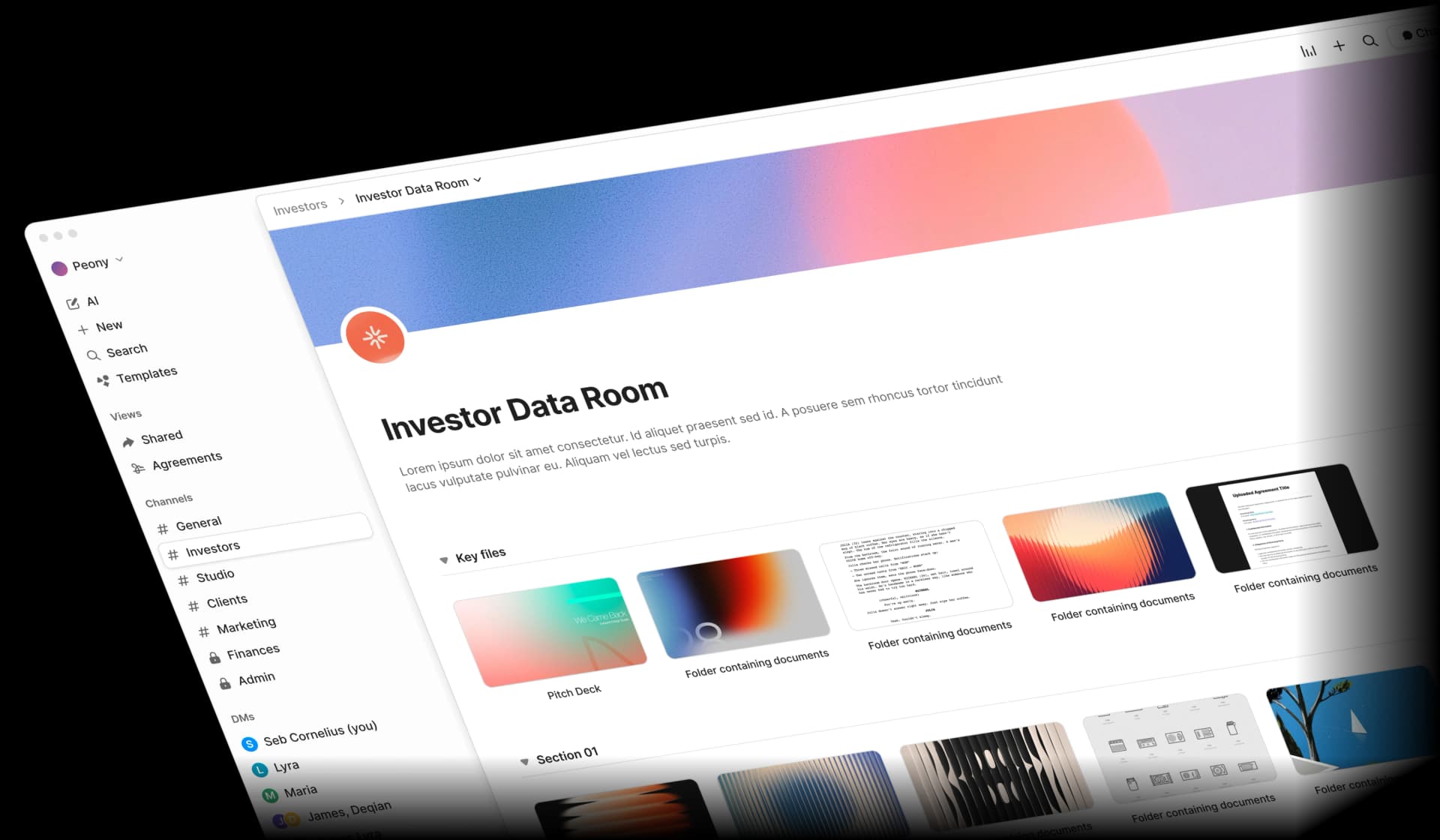
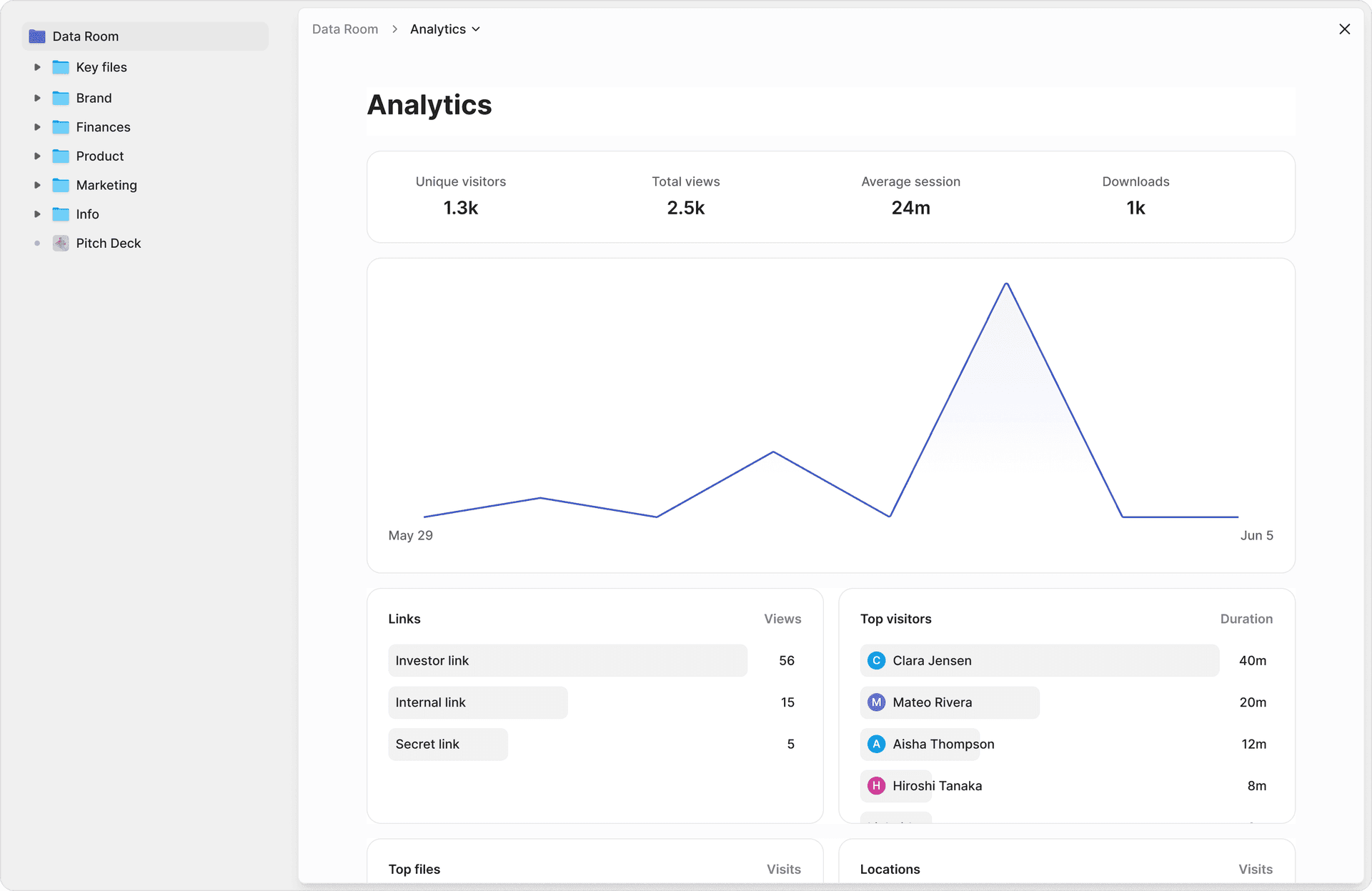
Before reaching out to any of these firms, organize your startup data room with Peony. Our AI auto-indexing structures your documents in under three minutes, and page-level analytics show you exactly which investor spent time on which page.
The Investors: Fund Details, Focus, and How to Approach
1. Peak XV Partners (formerly Sequoia India)
Website: peakxv.com
Headquarters: Bengaluru, Mumbai, Delhi
Latest fund: Closed $1.3 billion across three funds (India Seed, India Venture, APAC) in late 2025 — the firm's first major independent raise since separating from Sequoia Capital in 2023. Peak XV now manages over $10 billion across 16 funds.
Stage and motion: Seed ($5M max) through growth ($75-$100M). Leads rounds across the spectrum. Generated over $1 billion in realized proceeds in both 2024 and 2025.
Sectors: AI, fintech, consumer tech, SaaS, healthcare. Backed by universities, endowments, foundations, and sovereign funds.
Why founders pick them: The deepest bench in Indian VC — 450-plus portfolio companies, 35 IPOs, and a platform that spans recruitment, go-to-market, and cross-border expansion. If you want a partner who's seen every failure mode at every stage, this is the firm.
What they scrutinize: Market timing, founder-market fit, capital efficiency, and a clear path to category leadership.
How to pitch: Show that your wedge is defensible and your expansion path is repeatable. Peak XV values founders who can articulate both the "why now" and the "why us" with data. Prepare your materials in a secure data room — a firm this large triages fast.
2. Accel India
Website: accel.com
Headquarters: Bengaluru
Latest fund: $650 million Fund VIII (January 2025), bringing Accel's total India commitment to nearly $3 billion. Backed by 131 institutional LPs.
Stage and motion: Seed through Series A. Often leads, with fast follow-on reserves. Expanding beyond metro-city founders.
Sectors: Enterprise AI (agentic platforms, LLMs), "Services-as-Software" (automating India's IT services layer), consumer brands, fintech, manufacturing.
Why founders pick them: Repeatable SaaS and consumer playbooks built over two decades. Accel's India portfolio includes Flipkart, Swiggy, BrowserStack, and Freshworks. The platform team is hands-on from hiring through IPO prep.
What they scrutinize: Retention curves (activation through D90), bottoms-up adoption, hiring velocity, and expansion revenue dynamics.
How to pitch: One slide showing cohort retention and CAC payback. If you're building AI-native infrastructure, show how your moat deepens with usage. Use Peony's analytics to see whether Accel partners are spending time on your financial model or product demo.
3. Nexus Venture Partners
Website: nexusvp.com
Headquarters: Mumbai, Bengaluru, San Francisco
Latest fund: Closed $700 million Fund VIII in December 2025, maintaining the same size as Fund VII. Nexus now manages $3.2 billion across funds.
Stage and motion: Seed through Series A. Leads or co-leads with concentrated stakes and deep follow-on reserves. Integrated team across India and the US.
Sectors: AI, enterprise software, consumer, fintech. Maintaining a balanced allocation — not going all-in on AI, keeping roughly half the fund for India-specific bets.
Why founders pick them: The India-US bridge. Nexus offers US market access through its San Francisco team while providing hands-on company-building in India. Over 130 portfolio companies with 30-plus exits including 10 IPOs.
What they scrutinize: Founder-problem fit, wedge-to-platform logic, and design-partner validation. Nexus wants to see that your first 10 customers love the product, not that you have 1,000 lukewarm users.
How to pitch: Pipeline organized by design partners, a 12-to-18-month product roadmap, and a clear cross-border angle if applicable. Share your pitch deck through Peony so you can track engagement and know which Nexus partner reviewed your materials.
4. Elevation Capital
Website: elevationcapital.com
Headquarters: Gurugram, Bengaluru
Latest fund: $670 million Fund VIII for early-stage plus a separate $400 million Elevation Holdings vehicle for late-stage investments ($20M-$50M checks, 10-15 companies). Investment pace accelerated 100% in the past 12 months.
Stage and motion: Seed through Series A as the core, plus selective late-stage through the Holdings vehicle. Leads and supports. Stage-agnostic conviction means they can stay with you from seed to pre-IPO.
Sectors: Consumer, financial services, SaaS, healthcare. Portfolio includes Swiggy, Urban Company, ShareChat, Meesho, and Unacademy.
Why founders pick them: Long-standing India specialist (formerly SAIF Partners) with patient, stage-agnostic support. The dual-fund structure means Elevation can write your seed check and your pre-IPO check.
What they scrutinize: Product-market fit evidence, net revenue retention, and a realistic path to category leadership. They want to see milestones that de-risk the next round.
How to pitch: Lead with PMF evidence and two named likely follow-on leads. Show that your retention is durable and your unit economics improve at scale. Peony's link expiry ensures your financial projections don't circulate beyond their intended audience.
5. A91 Partners
Website: a91partners.com
Headquarters: Mumbai
Latest fund: $665 million Fund III (April 2025) — the firm's largest, up from $550M (Fund II) and $351M (Fund I). Backed by global LPs including the International Finance Corporation.
Stage and motion: Late seed through growth. Concentrated, high-conviction bets in small and mid-sized companies scaling to category leadership.
Sectors: Consumer, financial services, healthcare, manufacturing, and technology. Portfolio includes Digit Insurance, Sugar Cosmetics, HealthKart, Paper Boat, Plum, and Exotel.
Why founders pick them: Founded by former Sequoia executives, A91 brings institutional rigor to growth-stage investing. They focus on pragmatic governance and company-building at scale — not flashy announcements.
What they scrutinize: Category structure, working-capital cycles, cash conversion, and gross-margin trajectory. A91 runs deep financial diligence.
How to pitch: Scale math — gross-margin path, capex plan, and payback timeline. If you're in manufacturing or consumer, show contribution margin by channel and working-capital efficiency. Organize your financial model and due diligence documents in a Peony data room with granular access controls.
6. Lightspeed India and Southeast Asia
Website: lsvp.com
Headquarters: Bengaluru, Mumbai, Delhi
Latest fund: $500 million India and SEA Fund IV (December 2025), part of Lightspeed's record $9 billion global raise across six vehicles.
Stage and motion: Seed through growth. Comfortable leading. 74 India portfolio companies to date.
Sectors: Consumer, SaaS, fintech, AI. Cross-border scale support through the global Lightspeed platform.
Why founders pick them: Global platform with deep India roots. Lightspeed's portfolio companies can tap into the firm's US, Europe, and Israel networks for expansion. The $9B global platform means your Indian startup gets the same support infrastructure as a Silicon Valley company.
What they scrutinize: ICP clarity, repeatable acquisition channels, and sales efficiency. They want to see that your growth engine is systematic, not opportunistic.
How to pitch: Show repeatability by segment and efficiency targets per channel. If you have a cross-border angle, demonstrate how India-built product competes globally. Use Peony's password protection to control access to competitive intelligence documents.
7. Stellaris Venture Partners
Website: stellarisvp.com
Headquarters: Bengaluru
Latest fund: $300 million Fund III (November 2024), raising AUM to over $600 million. Plans to invest in 30-plus companies over the next three and a half years, with $100-$150 million earmarked for AI startups alone.
Stage and motion: Seed through Series A. Often leads, with entry checks up to $10 million. Concentrated support model.
Sectors: AI (agent builders, guardrails, security), deeptech (semiconductors, biotech, robotics, spacetech), and consumer. The "fund of founders" ethos — each GP has built companies.
Why founders pick them: Sharp seed discipline combined with genuine technical depth. Stellaris is selective and conviction-driven — they're not chasing AI hype, they're looking for durable moats. Five unicorns in the portfolio already.
What they scrutinize: ICP narrowness, activation metrics, and early retention by cohort. For deeptech, they dig into TRL, patent landscape, and design-partner validation.
How to pitch: Design-partner letters plus a roadmap to your first three expansion vectors. For AI startups, demonstrate what happens when the model gets commoditized — where is your moat? Protect sensitive IP with Peony's screenshot protection and dynamic watermarks.
8. Bessemer Venture Partners India
Website: bvp.com/india
Headquarters: Bengaluru
Latest fund: $350 million India Fund II (March 2025), up from $220M for the first India fund in 2021. Over 80% of India investments have been early-stage over the past five years.
Stage and motion: Early-stage through growth. Cross-border scale support through Bessemer's global platform. Nearly two decades in India with 80-plus portfolio companies and nine IPOs.
Sectors: AI-enabled services, SaaS, fintech, digital health, D2C brands, and cybersecurity. Portfolio includes Swiggy, BigBasket, Perfios, Urban Company, and Livspace.
Why founders pick them: Global platform plus India-specific capital. Bessemer's roadmaps, benchmarking tools, and network are unmatched for founders building India-first products with global ambitions.
What they scrutinize: Durable moats, enterprise readiness, and category leadership path. If you're building for the US from India, they want to see US/EU customer proof or partner pipeline.
How to pitch: For cross-border companies, lead with international customer validation. For India-first, show how your competitive moat deepens over time. Bessemer moves fast when conviction is high — have your data room for investors ready before the first meeting.
9. Blume Ventures
Website: blume.vc
Headquarters: Mumbai, Bengaluru
Latest fund: $175 million initial close of Fund V (October 2025), targeting $250-$275 million final close. Celebrating their 15th anniversary with continued backing from marquee LPs plus new institutional and multilateral investors.
Stage and motion: Pre-seed through Series A. Leads or tight co-leads with disciplined ownership. Already deploying Fund V into healthtech, AI, fintech, consumer, and deeptech.
Sectors: Healthtech (Mave Health), B2B AI (Confido Health), consumer (Lucira, Ozi), fintech (PowerUp Money), and deeptech (iDO) — reflecting a broad but thesis-driven approach.
Why founders pick them: India-native operator network with 15 years of pattern recognition. Blume's early-stage conviction is tested — they've backed companies before product-market fit and stayed through multiple pivots.
What they scrutinize: Weekly activation data, founder velocity (how fast do you ship and learn?), and capital efficiency. They track what you test monthly and your kill/scale criteria.
How to pitch: Bring an experiment stack — what you'll test in the next 90 days, with quantified kill and scale thresholds. Blume appreciates founders who are rigorous about learning velocity. Set up your seed-stage data room in Peony and share it with NDA gates before your first call.
10. Fireside Ventures
Website: firesideventures.com
Headquarters: Bengaluru
Latest fund: Closed $253 million Fund IV (December 2025) through a Gift City feeder vehicle and India master fund. Backed by Abu Dhabi Investment Authority, Investment Corporation of Dubai, HarbourVest, Fidelity International, and Emami Limited.
Stage and motion: Seed through Series A. Initial checks range from $1M to $12M, targeting 30-35 consumer brands. Deploying 10-12 deals per year.
Sectors: India's specialist D2C and consumer brands VC. Current portfolio of 60-plus brands valued at over $7 billion with $1.6 billion in combined revenue. Focus areas: sports and fitness, wellness and lifestyle, travel (Enchante Brands), and food and personal care.
Why founders pick them: Nobody understands Indian consumer brands like Fireside. They bring deep expertise in brand building, distribution strategy, and operational scaling that generalist VCs simply cannot match.
What they scrutinize: Contribution margins by channel, repeat purchase rates, retention curves, and retail rollout logic. For D2C, they want cohort LTV/CAC by acquisition channel.
How to pitch: Cohort LTV/CAC broken down by channel, with a credible retail expansion plan. Show that your unit economics work in both online and offline distribution. Protect your brand playbook with Peony's dynamic watermarks — every viewer sees their identity baked into every page.
11. Chiratae Ventures
Website: chiratae.com
Headquarters: Bengaluru
Latest fund: Fund V reached $150 million second close (September 2025), targeting $350 million with a $500 million hard cap. Over $1.3 billion under advisory across seven funds.
Stage and motion: Seed through Series B. Leads selectively with strong reserves. Already deploying Fund V into proptech (HouseEazy), AI SaaS (Pepsales), wealthtech (Mili), and quick commerce (ZILO), with six more in pipeline.
Sectors: AI, deeptech, healthtech, consumer tech, fintech, SaaS, climate tech, space tech, defense tech, and quantum technologies. Portfolio includes Lenskart, FirstCry, and Curefit.
Why founders pick them: Depth across multiple verticals combined with steady DPI (distributions to paid-in capital). Chiratae has been in India for over two decades and understands the regulatory and competitive landscape intimately.
What they scrutinize: Cohort stickiness, CAC payback period, and governance hygiene. They run thorough diligence on your cap table and compliance posture.
How to pitch: Show your NRR trajectory and a crisp org chart for the next four hires. Chiratae values governance maturity — demonstrate that your compliance documentation is organized and your board processes are clean.
12. 3one4 Capital
Website: 3one4capital.com
Headquarters: Bengaluru
Latest fund: $200 million Fund IV (oversubscribed in 2.5 months). Total committed capital exceeds $550 million with AUM above $750 million. Portfolio spans 80-plus early-stage investments with five unicorns and 30-plus profitable exits.
Stage and motion: Pre-seed through Series A. Leads or co-leads with disciplined follow-ons. Made 22 investments in 2025 and four so far in 2026.
Sectors: SaaS, fintech, consumer, AI, deeptech. India-first lens with a strong ecosystem presence — the annual 3one4 Summit convenes the best of India's founder community.
Why founders pick them: Tight, hands-on help with hiring, go-to-market, and governance. 3one4 has delivered Fund I DPI that leads benchmark for Indian VC — proof that early-stage discipline compounds.
What they scrutinize: Unit economics by segment, early NRR signals, and compliance posture. They want to see that your pricing and packaging experiments have clear readouts.
How to pitch: Show pricing and packaging experiments with quantified results. 3one4 values founders who iterate on monetization as rigorously as they iterate on product. Share your financial experiments through a Peony data room with per-document access controls.
13. Kalaari Capital
Website: kalaari.com
Headquarters: Bengaluru
Latest fund: $160 million venture capital fund. Active investor with 157 portfolio companies, eight new investments in the last 12 months, and continued deployment into 2026 (most recent: HireBound, February 2026).
Stage and motion: Seed through Series A. Leads rounds broadly across tech and consumer. Check sizes range from $500K to $5M with reserves for follow-on.
Sectors: Broad technology focus including AI (SuperBryn), construction tech (Modulus Housing), B2B SaaS, and consumer. Deep founder programs and India ecosystem development.
Why founders pick them: One of India's most established early-stage brands. Kalaari's founder programs provide mentorship, market access, and operational support that goes beyond capital.
What they scrutinize: Category narrative, defensible moats, and market-timing realism. They want your "why now" to be tied to a specific regulatory shift, infrastructure change, or distribution unlock.
How to pitch: Build your "why now" slide around a concrete shift — a regulation, a platform change, or an infrastructure unlock that creates your window. Use Peony's smart Q&A to handle investor questions asynchronously with a full audit trail.
14. Speciale Invest
Website: specialeinvest.com
Headquarters: Chennai, Bengaluru
Latest fund: Rs 600 crore Fund III (approximately $72M, closed August 2025), surpassing the Rs 500 crore target. Also preparing a Rs 1,400 crore growth fund for 2026. Plans for 18-20 investments between 2025 and 2029.
Stage and motion: Pre-seed through Seed, with follow-on capacity to Series A. Average entry ticket of $750K-$1M, with five to six investments per year. Technical diligence is intense — expect deep TRL reviews.
Sectors: India's deeptech seed specialist. Space tech, dual-use defense, advanced manufacturing, semiconductors, energy storage, robotics, quantum systems, computational biology, climate tech, and healthtech.
Why founders pick them: True deeptech patience. Speciale understands that hardware and science-based ventures have extended development cycles. They bring blended-finance literacy and connections to government procurement channels.
What they scrutinize: Technology readiness level, go-to-market for industrial and government buyers, capital-intensity realism, and IP defensibility.
How to pitch: A pilot storyboard with named labs, OEMs, or government agencies, plus a validation timeline. For defense tech, show your DRDO or MoD engagement path. Protect sensitive technical IP with Peony's AI redaction — our AI identifies and masks proprietary details before you share with external parties.
15. Omnivore
Website: omnivore.vc
Headquarters: Mumbai
Latest fund: $150 million Fund III first close, backed by KfW, IFC (with Gates Foundation support), Louis Dreyfus Ventures, and FMO. Initial checks of $1-$5 million. 57 portfolio companies across 15 years.
Stage and motion: Seed through Series A. Often the first institutional investor in agrifoodtech companies. Made seven investments in 2025 with continued deployment in 2026.
Sectors: India's agrifoodtech and climate specialist. Agri life sciences, rural fintech, climate-smart agriculture, food processing, and sustainable supply chains. Development-finance LPs give Omnivore a unique mandate to back impact-first businesses.
Why founders pick them: Category expertise that no generalist VC can match. Omnivore understands agricultural economics, seasonal cash-flow dynamics, and government policy at the district level. Their LP base includes development finance institutions that provide patient, mission-aligned capital.
What they scrutinize: Smallholder value creation, unit economics across seasons, life-cycle assessment, and impact metrics. They want farm-gate math — income uplift, yield improvement, and input cost reduction.
How to pitch: Lead with farm-gate economics and offtake agreements. Show how your product changes a farmer's income statement, not just their workflow. Use Peony's e-signatures to get NDAs signed before sharing proprietary agricultural data.
Also on the radar: India Quotient closed a $129 million Fund V (its largest), deploying $500K-$3M checks at idea and pre-seed stage across SaaS, fintech, D2C, and agritech. Half the fund is reserved for follow-ons. If you're pre-product, India Quotient is worth a conversation.
How to Approach Indian Investors
Five Tips That Actually Land
1. Lead with retention, not adjectives. One slide: activation to D30/D60/D90 retention, cohort-level payback, and what this raise buys in concrete milestones. Indian VCs have seen too many pitch decks with "revolutionary" and "disruptive" — show the numbers instead.
2. Bring two proof points that travel. A design-partner letter (enterprise) and a paid pilot (SMB or consumer). If you're cross-border from day one, include US or EU customer proof. Indian VCs increasingly value founders who can demonstrate global demand from India.
3. Own your compliance story. DPIIT recognition, SOC 2 and GDPR posture, and regulatory runway — especially in fintech, health, and edtech. India's regulatory environment is evolving rapidly. Show that you're ahead of it, not reacting to it. Peony's compliance features help you maintain SOC 2 and GDPR posture throughout the fundraise.
4. De-risk the next round. Spell it out: "This capital gets us to N logos, X% NRR, and Y months of runway," plus name two likely follow-on leads by fund and partner. Indian investors want to see that you've mapped the path from this round to the next.
5. Keep the data room boring. Cap table, IP assignments, customer letters, cohort tables, DPIIT certificate, and a milestone-indexed budget. Clean beats clever. Use Peony to organize your startup data room — our AI auto-indexes everything in under three minutes and screenshot protection blocks and logs capture attempts so your cap table doesn't end up in a WhatsApp group.
By the Numbers: India Venture Capital in 2026
- $9.1 billion raised by Indian tech startups in 2025, up 23% year-over-year (Nasscom)
- $16 billion in total PE/VC investment in India in 2025, second consecutive year of growth (Bain India VC Report 2025)
- 58% surge in AI funding year-over-year in 2025, with 188 deals totaling $1.22 billion (India Deep Tech Alliance)
- 126 unicorns in India as of March 2026, third globally behind the US and China (Tracxn)
- $5.4 billion in VC/growth equity fund-raising in 2025, doubling year-over-year (Bain)
- $1.1 billion government-backed Startup India Fund of Funds 2.0 approved February 2026 for deeptech and manufacturing
- 18 startup IPOs on Indian exchanges in 2025, raising a record Rs 41,248 crore collectively
- 4,200-plus deeptech startups in India, including 550-plus founded in 2025 alone (Nasscom)
- $1 billion committed by the India Deep Tech Alliance specifically for AI startup funding over the next three years
- $390 billion combined valuation of India's 126 unicorns as of January 2026 (Inc42)
Bottom Line
India's VC ecosystem is no longer a "coming soon" story. With $16 billion deployed in 2025, a government doubling down with $1.1 billion in fresh fund-of-funds capital, and AI funding surging 58%, the money is here and actively moving. But "active" doesn't mean undiscriminating — deal count dropped even as dollar volume rose, meaning investors are writing fewer, larger checks with higher conviction.
The 15 firms above represent the best-funded, most thesis-driven VCs in India right now. Each has fresh dry powder and a clear sector focus. Your job is to match your stage, sector, and ambition to the right partner — not spray 50 cold emails across every fund on Twitter.
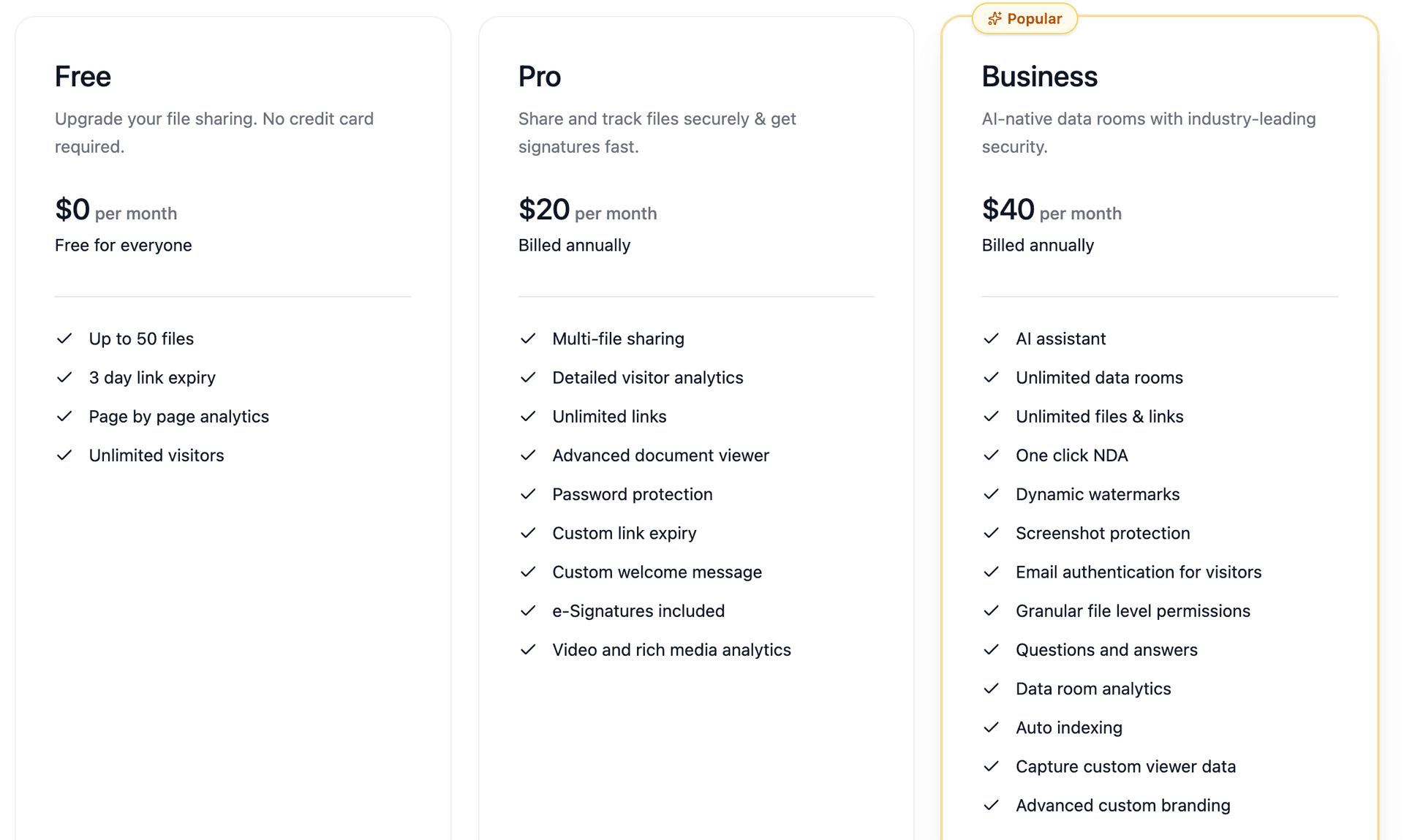
Set up your Peony data room before your first meeting. At $20/admin/month on Pro or $40/admin/month on Business (or free to start), there's no reason to walk into a Peak XV or Accel meeting with a Google Drive folder. Our page-level analytics tell you exactly which partner reviewed your financial model, your AI document extraction answers investor questions with cited page numbers, and dynamic watermarks protect your materials from unauthorized sharing.
Frequently Asked Questions
How much venture capital was invested in India in 2025?
India's tech startups raised approximately $9.1 billion in 2025, a 23% year-over-year increase driven by AI and deeptech. Total PE/VC investment including late-stage reached roughly $16 billion. Peony's page-level analytics help Indian founders track exactly which investors engage with their data room materials, so they can time follow-ups with the firms deploying this capital.
Which are the most active venture capital firms in India right now?
The most active India VCs by recent fund size include Peak XV Partners ($1.3 billion across three funds), Nexus Venture Partners ($700 million Fund VIII), Accel India ($650 million Fund VIII), A91 Partners ($665 million Fund III), and Lightspeed India ($500 million Fund IV). Peony's AI-powered data rooms let founders share deal materials with all of these firms simultaneously while tracking engagement at the page level.
What sectors are Indian VCs focusing on in 2026?
Indian VCs are prioritizing AI and deeptech (funding jumped 58% year-over-year in 2025), fintech, SaaS, consumer brands, climate tech, and defense tech. Speciale Invest and Stellaris are leaning into deeptech, while Fireside dominates D2C consumer. Peony's AI document extraction lets founders answer investor questions about sector-specific metrics directly from uploaded documents.
What is the typical check size for seed-stage VCs in India?
Seed-stage checks in India typically range from $500,000 to $5 million. Blume Ventures and India Quotient write $500K to $3 million initial checks, while Stellaris can go up to $10 million at entry. Kalaari and 3one4 Capital fall in the $500K to $5 million range. Peony's free tier lets pre-seed founders set up a professional data room before their first institutional meeting.
How do I prepare a data room for Indian investors?
Indian investors expect a clean data room with your cap table, DPIIT recognition documents, financial models, cohort retention data, customer letters, and a milestone-indexed budget. Organize everything in labeled folders with restricted access per document. Peony's AI auto-indexes documents in under 3 minutes and adds screenshot protection that blocks and logs capture attempts.
Are there government-backed venture capital programs in India?
Yes. The Indian Cabinet approved Startup India Fund of Funds 2.0 in February 2026 with a Rs 10,000 crore (approximately $1.1 billion) corpus targeting deep tech and tech-driven manufacturing. The first iteration invested over Rs 255 billion into 1,370-plus startups through 145 private funds. Peony helps startups applying to government-backed programs organize compliance documents with NDA gates and dynamic watermarks.
What is the best way to approach Indian VCs?
Lead with retention metrics, not adjectives. Show activation-to-D30/D60/D90 retention on one slide, bring two proof points (a design-partner letter and a paid pilot), own your compliance story with DPIIT and SOC 2 posture, and de-risk the next round with named follow-on leads. Peony's link expiry and password protection let you control exactly who sees your materials and for how long.
How many unicorns has India produced?
India has produced 126 unicorns as of March 2026 according to Tracxn, with a combined valuation exceeding $390 billion. India ranks third globally behind the United States and China. Eighteen startups listed via IPO in 2025 alone. Peony's data rooms support the fundraising journey from seed through IPO with page-level analytics and AI-powered Q&A workflows.
Which Indian VCs invest in AI and deeptech startups?
Stellaris Venture Partners plans to deploy $100 to $150 million from its $300 million Fund III into AI startups. Speciale Invest focuses exclusively on deep tech with its Rs 600 crore Fund III covering space, defense, robotics, and semiconductors. Accel India, Peak XV, Nexus, and Lightspeed all list AI as a priority sector. Peony's AI redaction helps deeptech founders share sensitive IP documents while automatically masking proprietary technical details.
What makes India attractive for venture capital investment?
India ranked third globally for tech startup funding, has 126 unicorns, a $3.5 trillion GDP, and 900-plus million internet users. The government's $1.1 billion Fund of Funds 2.0 and regulatory reforms for deep tech signal long-term commitment. VC fund-raising doubled year-over-year to $5.4 billion in 2025. Peony helps global LPs and co-investors access Indian deal materials through secure data rooms with multi-level access gating and built-in e-signatures.
Related Resources
- How to Send Your Pitch Deck to Investors
- Track Pitch Deck Engagement
- Startup Data Room Checklist
- Seed Funding Guide
- Data Room for Investors
- Startup Fundraising Rounds Guide
- How to Protect Your Pitch Deck
- Top Startup Accelerators in India
- VC Fund Data Room Checklist
- Due Diligence Data Room Checklist
- Document Sharing Compliance Guide
You might also like
May 15, 2025
Top 5 Indian Pre-Seed Investors in 2025: Complete Guide (Founder-First, No Fluff)
Apr 21, 2026
15 Active Australian Investors in 2026 (Check Sizes + Intro Paths)
Apr 20, 2026
13 Active Canada Investors in 2026 (Check Sizes + Sector Fit + Intro Paths)