
Guide the story.Keep the security
Pageform frames it as a choice — “Peony locks the files. Pageform structures the story inside.” You shouldn't have to pick. Pageform's narrative canvas and section-level analytics are genuinely differentiated, but Peony ships enforced document control, page-by-page analytics, and AI on published per-admin pricing used by 8,000+ customers — and even Pageform's own comparison page calls Peony “a modern AI-native data room.”Set up in under 5 minutes. No credit card required.
No credit card required

Side-by-side comparison
Pageform is an AI-native narrative data room from Miami built to guide a reader section by section. Peony is a modern virtual data room with per-admin pricing, enforced document control, and everything you need to share, track, and protect documents.
 Peony
PeonyWhy deal teams pick Peony over Pageform
Pageform is a strong choice when a guided narrative presentation is the heart of your raise. But deal teams and founders who share confidential documents often need enforced leak protection, page-level analytics, and audited security on transparent per-admin pricing — 8,000+ customers run their deals on Peony today. Pricing re-checked August 2026.
Enforced leak protection
Pageform offers document watermarking on Pro only, with no dynamic per-viewer watermarks and no screenshot protection. Peony adds screenshot protection on Business and dynamic per-viewer watermarks on Data Room.
Per-admin pricing
Pageform prices per workspace with a seat count and meters its AI Agent by tier. Peony charges per admin — $30, $52, and $64 per month — with unlimited storage, rooms, and free viewers on paid plans, and unmetered AI.
SOC 2 Type II audit
Peony is SOC 2 Type II-ready, with AES-256 at rest and TLS 1.3 in transit. Pageform discloses its infrastructure openly, but no third-party audit or certification is published on its site.
Page-by-page analytics
Peony shows exactly which pages each recipient read, how long they spent, and where they stopped — on every plan, including free. Pageform tracks engagement by section across the narrative you build.
Where Pageform genuinely wins
An honest comparison names the other side's strengths. If your raise is fundamentally a guided story and you accept the security trade-offs, Pageform's canvas is genuinely differentiated — here is where it leads.
Narrative canvas builder
Pageform's Narrative Builder lets you customize your story section by section, guiding a reader through a curated presentation rather than a file tree — a genuinely different reading experience Peony does not replicate.
Section-level engagement
Pageform tracks what each reader opens, skips, and revisits by section — a natural fit when your room is a story rather than a document set. Peony tracks at page level instead.
AI gap detection
Pageform's AI exposes missing deal-critical sections and can generate a data-room structure from your file input, plus AI summaries — a helpful drafting aid for a first-time fundraiser assembling a room.
Transparent infrastructure
Pageform openly discloses its stack — Cloudflare, Supabase with row-level security, private AWS S3, Azure for AI — and states content is never used to train models, with a DPA on request. That transparency is more than many vendors publish.
Pricing comparison
Both Peony and Pageform publish pricing. The difference is the model: Peony charges per admin with unlimited storage and viewers and unmetered AI, while Pageform prices per workspace with seat counts and meters its AI Agent by tier.

Peony
Free
$0
Up to 50 documents
Business
$30/admin/mo
NDA gates, screenshot protection, AI Q&A ($44 monthly)
Data Room
$52/admin/mo
Dynamic watermarks, AI auto-indexing, unlimited rooms ($75 monthly)
Deal Team
$64/admin/mo
Redaction, Advanced Q&A, SSO, API — 4-admin minimum ($89 monthly)
Unlimited rooms, unlimited storage, and unlimited free viewers — Peony charges per admin, not per viewer or per seat. NDA gates, screenshot protection, and AI Q&A on Business; dynamic per-viewer watermarks, Advanced NDA countersigning, and AI room generation on Data Room.
Pageform
Free
$0
1 seat, up to 30 files, 1 GB, 5-day link expiry
Docs
$30/mo
Unlimited docs, e-sigs, File Q&A, 15 GB (promo $25)
Core (best value)
$69/mo
Up to 3 rooms, AI Agent 1×, Room Q&A, NDA gating, 50 GB (promo $55)
Pro
$139/mo
5 seats, unlimited rooms, AI Agent 3×, document watermarking, 100 GB (promo $110)
Per Pageform's published pricing page (August 2026, all monthly with promo codes live). AI Agent usage is metered by tier (1× on Core, 3× on Pro). Document watermarking is Pro-only; dynamic per-viewer watermarking and screenshot protection are not offered.
When to use each platform
Pageform excels when a guided narrative presentation is the core of your raise and section-level engagement matters most. Peony is the better choice for teams that need enforced document control, fast setup, per-admin pricing, and audited security.
Choose Pageform when you need
A guided narrative canvas that walks readers through your story section by section
Section-level engagement analytics on what each reader opens, skips, and revisits
AI gap detection and a data-room generator that drafts structure from your file input
Openly disclosed infrastructure and a no-AI-training stance, with a DPA on request
Choose Peony when you need
A data room you can set up in minutes for fundraising, M&A, or due diligence
Per-admin pricing with unlimited free viewers and storage — no per-seat or metered-AI bill
Page-by-page analytics to track exactly what investors and partners read
Screenshot protection, dynamic per-viewer watermarks, NDA gates, and link expiry
AI document Q&A, AI auto-indexing, and an MCP server for agent-ready access
SOC 2 Type II-ready security, with EU residency available on Enterprise
What Peony gives you out of the box
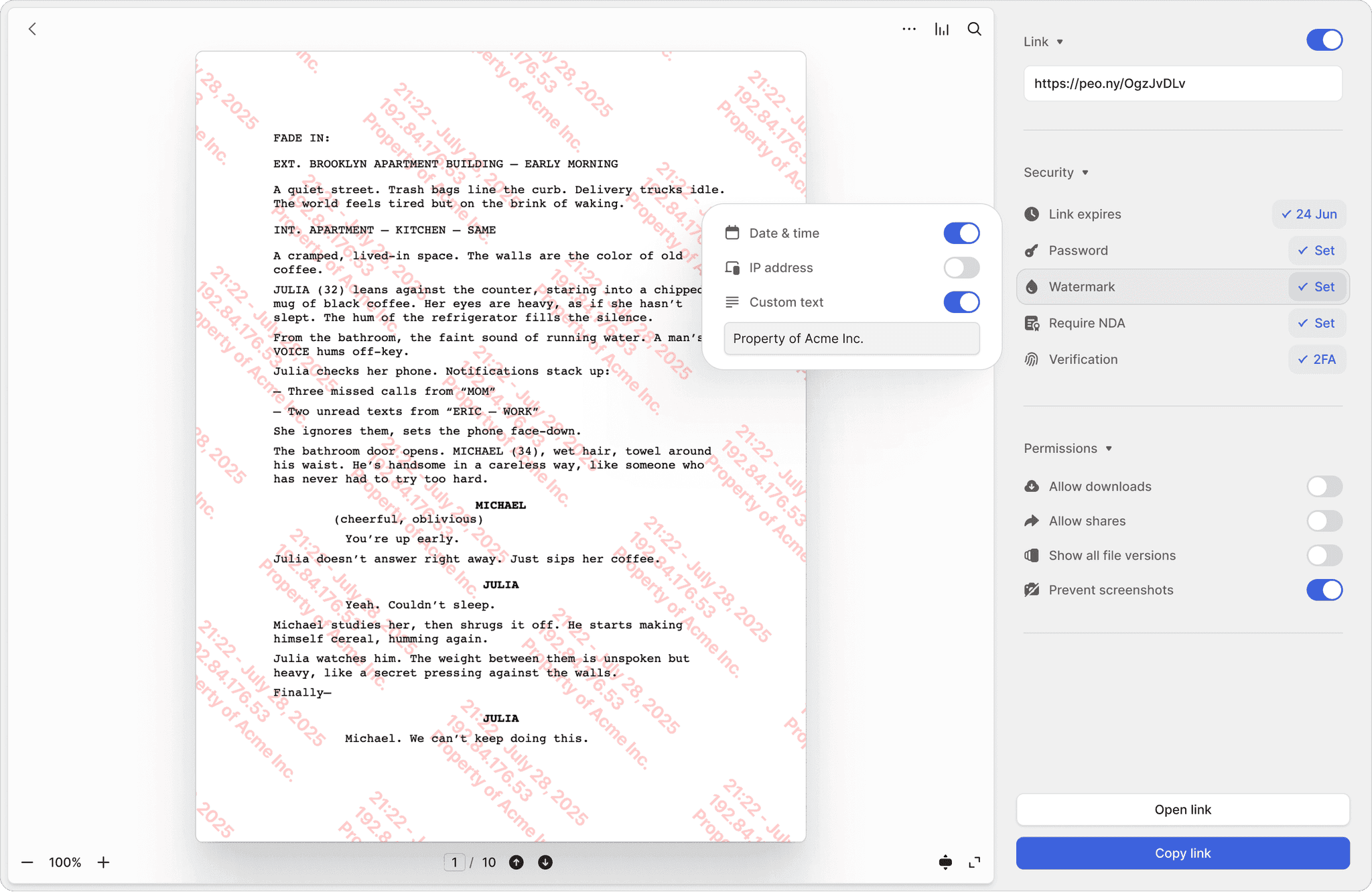
Stop document leaks before they happen
Peony blocks screen captures of confidential deal documents on the Business plan and stamps every page with the viewer's identity through dynamic per-viewer watermarks on the Data Room plan — so if a document leaks, you know exactly who shared it. Pageform offers document watermarking on Pro only, and its own comparison page concedes it has no screenshot protection.
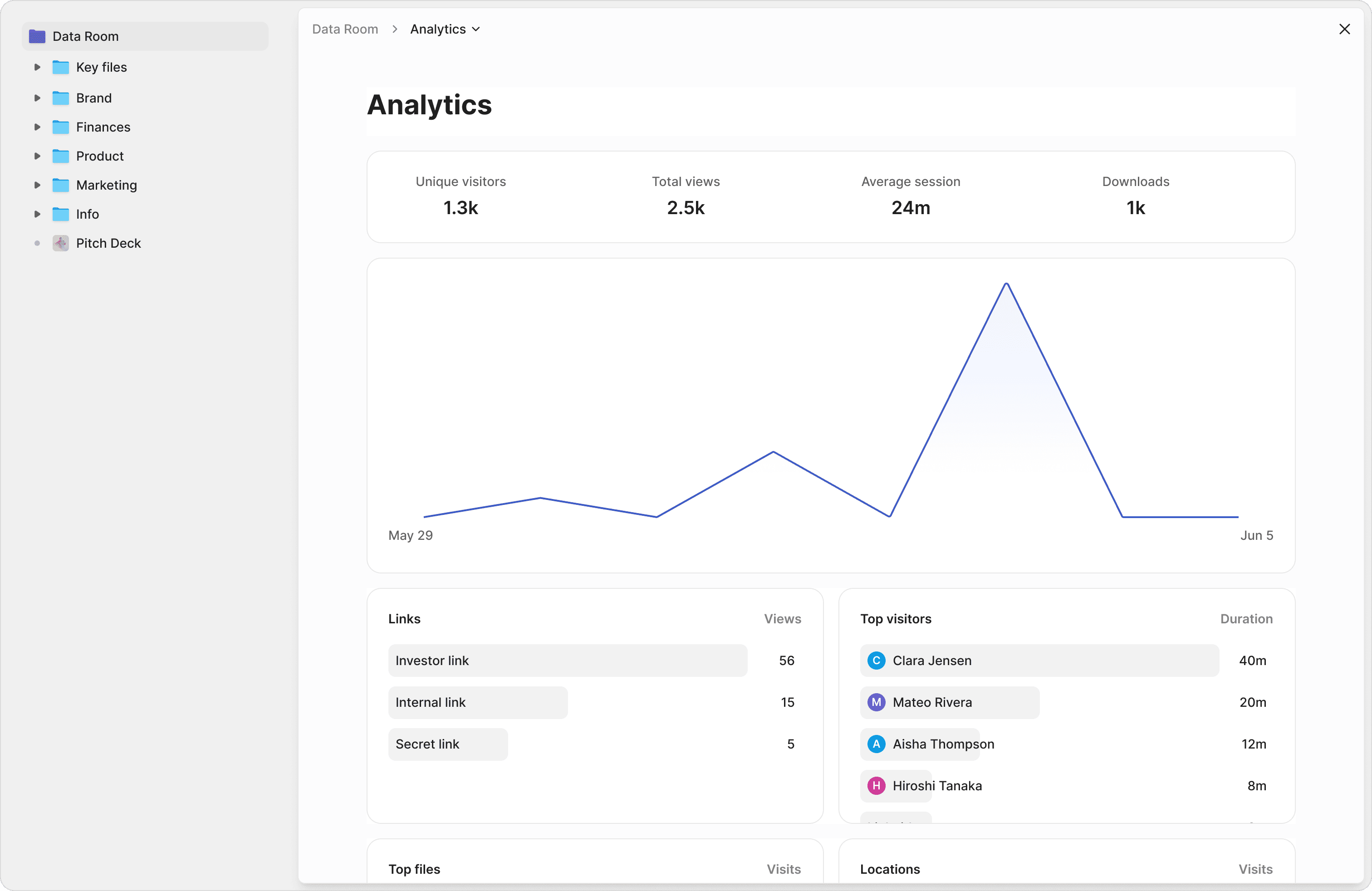
Know exactly what your recipients read
Pageform tracks engagement by section across the narrative you build. Peony goes granular with page-by-page analytics — time spent on each page, scroll depth, and visitor details — on every plan, including free. See which pages of your CIM or pitch deck bidders focus on most, and prioritize your follow-ups.
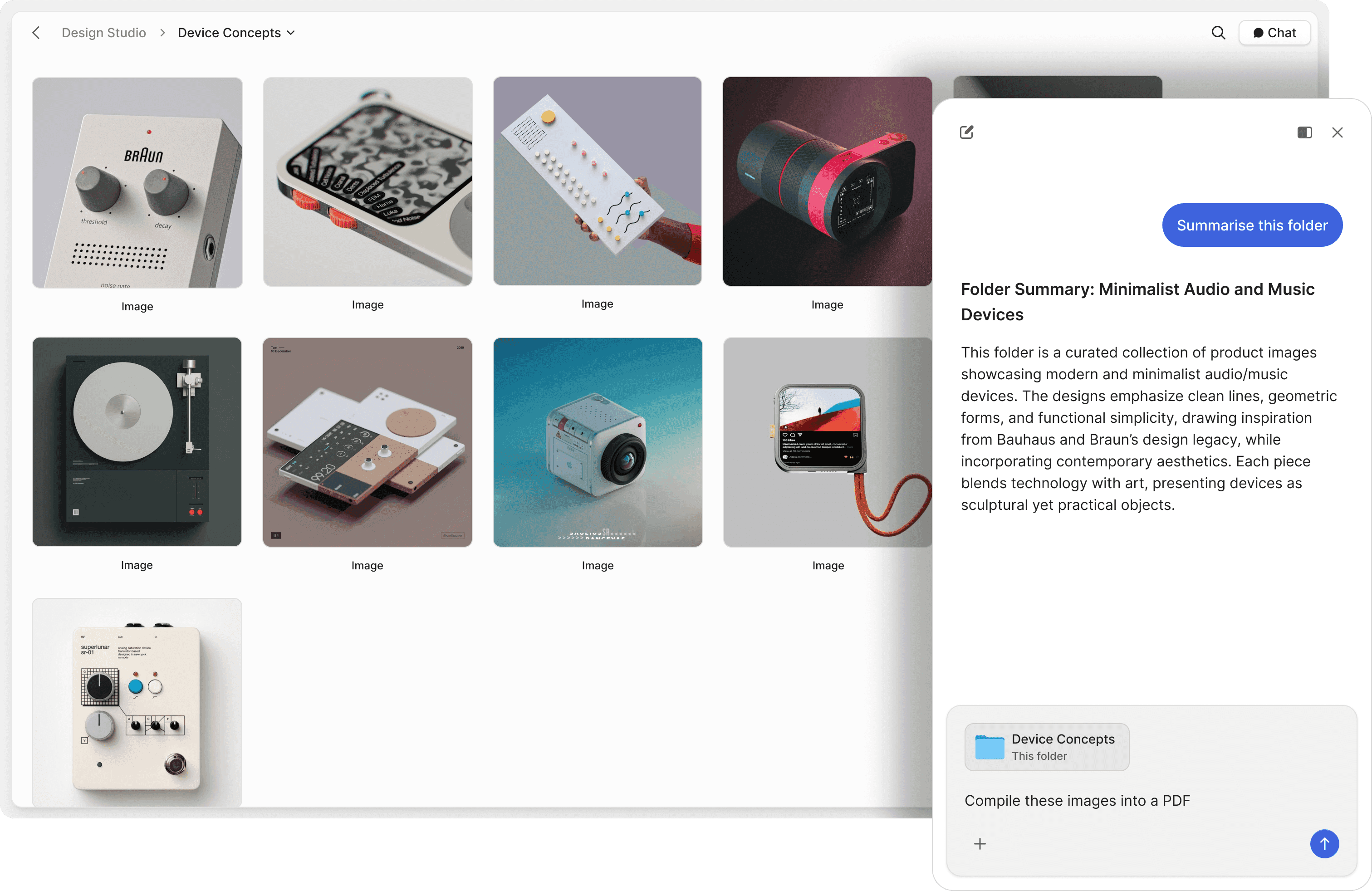
Let deal parties ask questions and get instant answers
On the Business plan, Peony lets buyers, investors, and partners ask questions about your data room and receive instant, accurate answers pulled directly from your documents — 24 hours a day, 7 days a week. Pageform offers File Q&A on Docs and Room Q&A on Core, with its AI Agent metered by tier; Peony's AI Q&A and room generation are unmetered on published plans.
Screenshot protection
Block screen captures of sensitive documents on the Business plan — a self-serve leak-prevention layer Pageform's own comparison page concedes it does not offer.
Under-5-minute setup
Sign up, upload documents, configure security, and share a branded link in minutes — no sales call, proposal, or onboarding project required.
NDA-gated access
Require viewers to sign an NDA before accessing your data room on the Business plan, with Advanced countersigning on Data Room. One click, legally binding, built into the viewer flow.
Page-level analytics
Track which pages recipients read, how long they spent, and where they stopped — on every plan, including the free tier.
AI auto-indexing
On the Data Room plan, AI classifies and structures your uploads automatically, so a diligence-ready index builds itself as you add documents — unmetered.
SOC 2 Type II-ready
Peony is SOC 2 Type II-ready, with AES-256 encryption at rest and TLS 1.3 in transit. Pageform publishes no third-party audit or certification on its site.
"Peony has completely streamlined our workflow for managing investor and partner materials by providing an incredibly intuitive, secure data room experience that replaces clunky legacy tools."
Sudhir S.
Chief Technology Officer
Verified review on G2
Frequently asked questions
I'm a founder raising a seed round and I like the idea of a guided narrative instead of a folder of files — is Pageform or Peony the better fit?
It depends on how central the guided story is to your raise. Pageform's genuine differentiator is its Narrative Builder — a section-by-section canvas that walks a reader through your story rather than dropping them into a file tree, plus section-level engagement analytics that show what each reader opens, skips, and revisits. If your raise lives or dies on a guided narrative presentation and you accept the security trade-offs, Pageform's canvas is genuinely differentiated. Peony takes the data-room path: upload your deck and supporting files, share one branded link, and use page-by-page analytics to see exactly which pages investors read. Peony adds screenshot protection, dynamic per-viewer watermarks, and AI document Q&A on published per-admin plans. Choose Pageform for the narrative; choose Peony when the same round needs enforced document control and audited security.
I'm a GP building an LP data room — does Pageform's section-level engagement analytics beat Peony's page analytics for tracking limited partners?
Both give you reader visibility, but at different resolutions. Pageform tracks engagement by section — you see what each reader opens, skips, and revisits across the narrative you built, which is genuinely useful when your room is a curated story. Peony tracks at page level on every plan, including free: time spent per page, scroll depth, and where each LP stopped inside your PPM or track-record deck. For an LP room, the deciding factors are usually document control and residency, not just analytics grain. Peony adds dynamic per-viewer watermarks (Data Room plan, $52/admin/month), Advanced NDA with countersigning, granular per-viewer permissions, and SOC 2-ready self-serve security documentation. Pageform publishes no third-party audit or certification on its site. If section-level narrative tracking is your priority, Pageform is strong; if enforced LP-grade controls and audited security are, Peony fits the mandate better.
Our M&A team shares confidential CIMs with multiple bidders — how do Pageform and Peony compare on document protection like screenshot blocking and per-viewer watermarks?
This is the clearest gap, and Pageform concedes it on its own comparison page. Pageform offers document watermarking on its Pro tier only, with no dynamic per-viewer watermarking and no screenshot protection. Peony includes screenshot protection on the Business plan ($30/admin/month) and dynamic per-viewer watermarking on the Data Room plan ($52/admin/month), stamping every page with the individual viewer's identity so a leaked CIM traces back to one bidder. Peony also adds NDA gates on Business and Advanced NDA with countersigning plus granular per-viewer permissions on Data Room, backed by AES-256 at rest, TLS 1.3, and SOC 2-ready infrastructure. For sell-side diligence where a leaked deal document is a real risk, Peony's enforced DRM layer is the material difference. Pageform's strengths are narrative and section-level analytics, not document leak prevention.
Pageform Pro is $139/month for the full feature set — is Peony's $52 Data Room plan actually cheaper once you match features?
Compare like for like. Pageform Pro is $139/month (promo $110), which bundles 5 seats, unlimited rooms, the AI Agent at 3× usage, granular link permissions, a custom domain, document watermarking, an activity audit trail, and 100 GB. Peony's Data Room plan is $52 per admin per month ($75 monthly) and includes dynamic per-viewer watermarking, Advanced NDA with countersigning, granular per-viewer permissions, AI auto-indexing, AI room generation, and unlimited rooms — with unlimited storage and unlimited free viewers. The structural difference: Pageform prices per workspace with a seat count and meters AI Agent usage by tier (1× to 3×); Peony charges per admin, never per viewer, and does not meter its AI. For a small team that wants enforced watermarking and unmetered AI, Peony's $52 tier undercuts Pageform Pro while adding screenshot protection and SOC 2-ready security.
As compliance counsel, I need to know: is Pageform SOC 2 or ISO 27001 certified, and how does that compare to Peony?
State this plainly. Pageform's security page discloses AES-256 at rest, TLS in transit, short-lived URLs, and its infrastructure — Cloudflare, Supabase with row-level security, private AWS S3, and Azure for AI — and states content is never used to train models, with a DPA available on request. That infrastructure transparency is genuinely more than many vendors publish. However, no third-party audit or certification is published on its site — no SOC 2, no ISO 27001. Peony is SOC 2 Type II-ready, with AES-256 at rest and TLS 1.3 in transit, and likewise never trains AI on customer documents. If your diligence checklist requires an independent audit report, Peony can produce one and Pageform's public materials do not indicate one exists. If disclosed infrastructure and a DPA satisfy your review, Pageform's posture may be sufficient — but confirm directly, because absence of a published certification is not the same as absence of controls.
Pageform's own comparison page lists Peony pricing — can I just trust the tiers shown there?
Always check a vendor's pricing page directly rather than a competitor's summary of it. As of August 2026, Pageform's own Peony comparison lists a '$20 Pro' and '$50 Business' plan; Peony's published tiers are Free $0, Business $30/admin/mo annual ($44 monthly), Data Room $52 ($75 monthly), and Deal Team $64 — check any vendor's pricing page directly. This is not an accusation, just the reason to verify: pricing tables on comparison pages go stale, and the plan names and numbers shown for a competitor may not match that competitor's live ladder. The same caution applies in reverse — read Pageform's own /pricing for its Free, Docs $30, Core $69, and Pro $139 tiers rather than relying on any third-party recap, including this one. When two vendors publish transparent pricing, the honest move is to open both pricing pages side by side before you decide.
We have a live fundraise running on Pageform right now — can we move to Peony without disrupting it?
Yes, and most teams finish the move in a single session. Create a Peony data room, upload your documents, configure security like NDA gates, dynamic per-viewer watermarks, and granular per-viewer permissions, then share one branded link. If your Pageform room leaned on a guided narrative, decide honestly whether that presentation format was essential — Peony organizes by document and page rather than a section-by-section canvas, and AI auto-indexing (Data Room plan, $52/admin/month) structures uploads into a diligence-ready index automatically, while AI room generation can draft the initial structure from your files. Peony's interface needs zero training for investors and counsel, with no onboarding project. One honest caveat: if the guided narrative canvas itself is the reason you chose Pageform, that specific reading experience does not carry over — you gain enforced document control, page-by-page analytics, and SOC 2 Type II audit in exchange.
Compare other data room providers
Weighing Pageform against the wider field? Explore our full data room comparisons, or read our M&A data room solutions.