
In pharma, the catalogue is a controlled document
Prescription-only medicines cannot be advertised to the public — and the per-account price list is the margin, printed. Peony is the gated trade channel for both: verified buyers see exactly their catalogue and their prices, every certificate stays current, and dossiers travel under NDA with watermarks, analytics, and same-day revocation. More than 8,000 customers run sensitive document processes this way.
Quick answer · Updated July 2026
What does a pharmaceutical distributor need from a document platform? A gated catalogue, because prescription-only medicines may not be advertised to the public but may be shown to verified health professionals — so the gate is what makes the catalogue lawful. Per-account isolation, because every trade account has its own negotiated prices and the discount is the secret. Version currency, so no one quotes a superseded price list or relies on an old certificate. And a dossier channel with NDA gating, watermarking, and access logs that map onto GDP documentation-control expectations. Peony does all four on per-admin pricing — Business $30/admin/month, Data Room $52/admin/month, trade accounts free — and is SOC 2 Type II-ready. It does not verify licences and does not replace your ordering portal; it is the confidential document layer alongside them.
No credit card required
Pharma distribution breaks the tools everyone else uses
A public webshop is fine for consumer goods and unlawful for a POM catalogue. An emailed PDF is fine for a newsletter and a liability for a per-account price list. The documents that run a wholesale book — catalogues, price lists, certificates, dossiers — need a channel that is gated, current, and logged.
The POM catalogue legally cannot face the public
Advertising prescription-only medicines to the public is prohibited (UK HMR 2012; VMR 2013 for POM-V) — but the same catalogue is lawful inside a channel directed at verified health professionals. The gate is not a preference; it is what makes the catalogue lawful.
Per-account price lists leak between accounts
List prices are public in the Drug Tariff; the discount is the secret. When every account gets a different negotiated price and the file travels as an email attachment, leakage means disputes, eroded negotiating position, and competitors matching your terms.
Stale SPCs, CoAs, and price lists keep circulating
An emailed PDF freezes the moment you send it. Buyers quote last quarter's prices, rely on superseded certificates, and GDP expects version-managed, controlled documentation — not five copies of an old file living in customer inboxes.
Dossiers travel beyond the confidentiality agreement
An exporter's CTD dossier or technical pack goes out by email and WhatsApp, then goes wherever the recipient forwards it. No watermark, no view log, no revocation when the agreement ends — and no idea whether the distributor even read it.
One gated channel, from trade catalogue to dossier
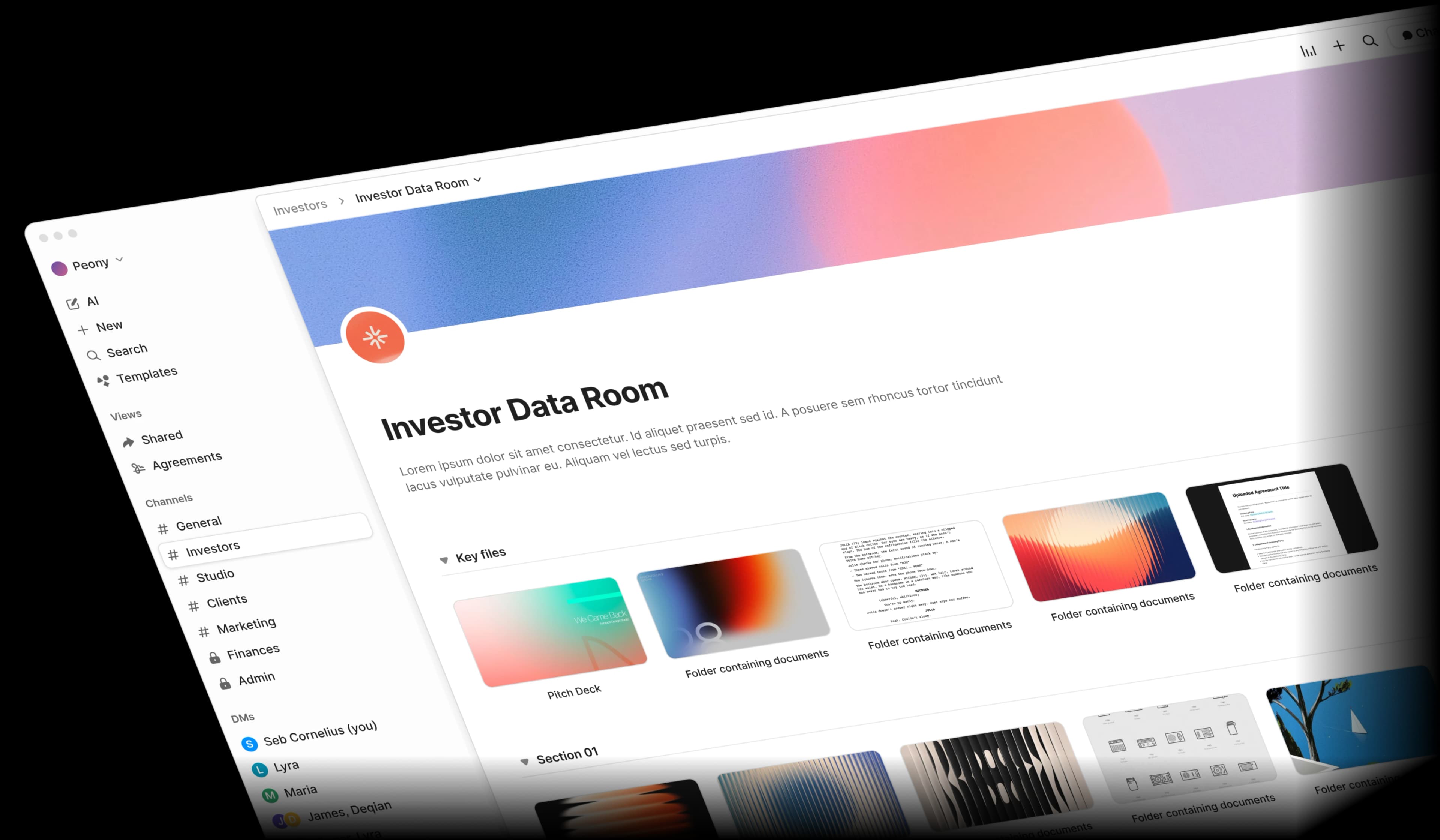
Peony gives the confidential half of pharmaceutical distribution a proper home: gate the catalogue to verified trade buyers, isolate per-account price lists, keep every SPC, CoA, and price current, and share dossiers under NDA with a full audit trail. For a distribution book, lead with the Data Room plan ($52/admin/month — watermarking and unlimited rooms). See the full plan comparison.
How do you gate a pharmaceutical catalogue to verified trade buyers only?
Make the room the verified trade channel your POM and POM-V lines legally require. Your team verifies an applicant against the register — that decision stays yours — and the room enforces it: the buyer lands in a visitor group holding exactly the catalogue and price list you assigned, behind an NDA or trade-account gate, with every open logged. New accounts submit applications and licence evidence through no-account upload links. The full playbook is in our pharmaceutical distribution data room guide.
Per-account visitor groups
Each account or pricing tier is its own group with its own documents — a buying group never sees an independent's terms, and no account sees another's price list.
Verification enforced, not replaced
Peony does not verify licences or run KYC — your team checks the register; the room enforces the decision, gates access, and records the evidence trail.
Account applications, collected cleanly
Credit forms and licence evidence arrive through secure upload links with no account required — one controlled intake instead of an inbox.
How do you stop stale price lists, SPCs, and CoAs from circulating?
Send links, not attachments. With update links, the file behind the link is replaced on revision day and every account opens the current version — the stale-PDF problem disappears structurally. AI auto-indexing keeps hundreds of batch-level certificates of analysis organised by product line and batch, and the access log gives you the version-controlled, demonstrable documentation pattern GDP inspections expect. Records stay retrievable years later, not buried in a mailbox.
One current version, always
Swap the file behind the link on revision day; every account opens the new list. Link expiry retires anything that should stop circulating.
Batch CoAs a buyer can actually find
Product line, then batch — auto-indexed so a pharmacist or vet chasing one batch's certificate reaches it in two clicks, current version guaranteed.
An audit trail that maps to GDP expectations
Who accessed what, when, and which version — the documentation-control evidence your responsible person wants in front of an inspector. Your quality system stays the compliance layer.
How do exporters share dossiers and certificates without losing control of them?
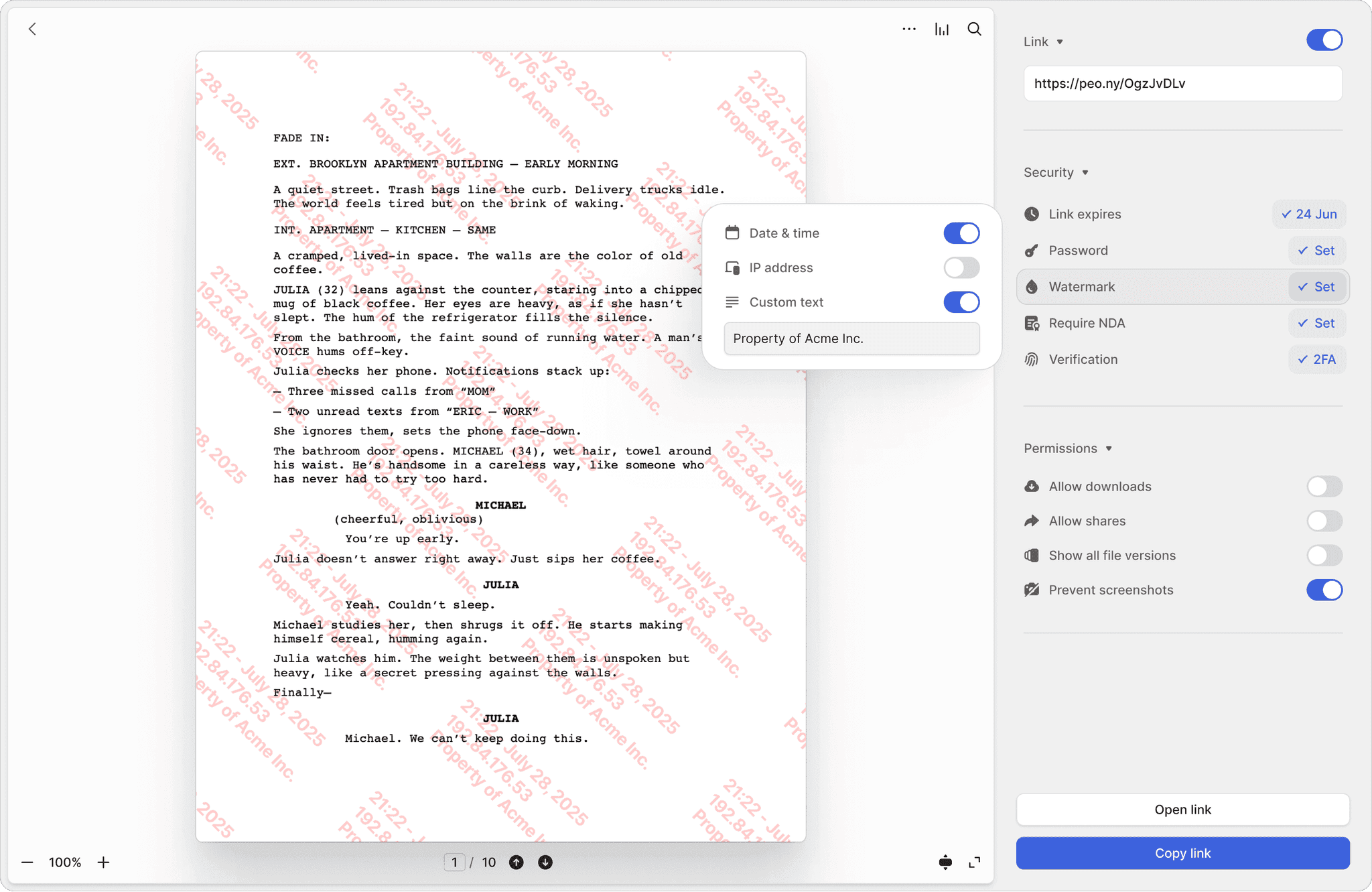
Put the confidentiality agreement in front of the documents, not in a separate email thread. Distributors accept the NDA gate before the dossier opens, dynamic watermarks stamp each page with the viewer's identity, and page-level analytics show which modules they actually read — a distributor who stops engaging is telling you something. When the agreement ends, revoke access the same day. Serve it all from your own custom domain with your branding, so the trade channel reads as yours.
NDA before the first page
The CDA is accepted in the room, logged with identity and timestamp, before a dossier, price list, or specials line-listing is visible.
Traceable, watermarked pages
Viewer-identity watermarks turn an anonymous leak into an attributable one — which changes behaviour and gives you the evidence for the conversation.
Your trade portal, your name
Custom domain and branding make the gated channel look like your business, not a third-party tool.
"Ease of use, drag and drop capabilities, rapid response in support, and great service and value. It was easy to navigate throughout the platform as well as setting up our data room."
Joseph Garcia
Providence Water
Frequently asked questions
Why can't we just publish our product catalogue and prices on our website?
If your lines include prescription-only medicines, a public catalogue that promotes their supply risks being an unlawful advertisement to the public — in the UK, the Human Medicines Regulations 2012 prohibit advertising POMs to the public, while advertising directed at verified health professionals is permitted; veterinary POM-V lines follow the same logic under the Veterinary Medicines Regulations 2013. And commercially, your per-account price list is the margin, printed. Both point the same way: a gated, verified trade channel, not a public page. This is general information, not legal advice — confirm the current position with your compliance lead.
Does Peony verify that a buyer is a licensed pharmacy or vet practice?
No — and we won't pretend otherwise. Checking an applicant against the relevant register and reviewing their licence is your team's decision and process. What Peony does is enforce and record that decision: an approved buyer lands in a visitor group with exactly the catalogue and price list you assigned, an NDA or trade-account gate sits in front of sensitive content, and every access is logged. New applicants can submit their details and licence evidence through a no-account upload link, so the paperwork arrives in one controlled place instead of an inbox.
How do we give each trade account its own price list without accounts seeing each other's terms?
Each account or pricing tier becomes its own visitor group, and only that group's price list is attached to it. A buying group on a collective discount never sees an independent pharmacy's terms, and neither sees the other. When you revise pricing, you swap the file behind an update link so every account opens the current version — no re-sending, no stale PDFs. Dynamic watermarks stamp each viewer's identity on what they open, so a leaked list traces back to the account it came from.
Can a data room make us GDP compliant?
No tool makes you GDP compliant — your quality system does. What a data room supports is the documentation-control pattern GDP inspections look for: one current version of each controlled document, superseded versions retired the moment you replace them, and an access log showing who opened what and when. UK GDP expects transaction records kept at least five years and document control you can actually demonstrate. Peony's version-controlled links, permissions, and audit logs give you that evidence trail; your SOPs and responsible person remain the compliance layer.
We export — can we share dossiers and certificates with overseas distributors through Peony?
Yes, and it is exactly the shape the exporter flow needs. Put the dossier behind an NDA gate so the confidentiality agreement is accepted before a page is seen, watermark what is sensitive, and use page-level analytics to see whether the distributor actually reviewed it — which modules, for how long. Certificates of analysis stay organised by product line and batch with AI auto-indexing, and when a distribution agreement ends, revoke access the same day. The industry already splits documents by who may see them (the DMF's open and closed parts); your sharing layer should enforce the same discipline.
Does Peony replace our ordering portal or webshop?
No. Your storefront or ordering portal transacts — orders, baskets, invoices — and you should keep it. Peony is the confidential document layer that sits alongside it: the gated catalogue and per-account price lists, the licence and GDP certificates you exchange during onboarding, the specials line-listings you can only show verified buyers, the dossiers under NDA. Storefronts are built to sell; they are not built for controlled, tracked, revocable document exchange. Run both, each doing its job.
What does it cost for a wholesaler with hundreds of trade accounts?
Peony is priced per admin seat, not per recipient — Business is $30/admin/month and Data Room is $52/admin/month (annual billing), with a free tier to start. Your internal team holds the seats; your trade accounts open their catalogues, price lists, and certificates for free, whether you have 100 accounts or 1,000. That is the economic shape a wholesale book needs — per-user-external platforms bill you for every account, which punishes exactly the thing your business is built on. Deal-based VDRs price for one-off M&A projects; distribution runs always-on.
Give your trade catalogue a lawful home
Gate the catalogue to verified buyers, isolate per-account pricing, keep every certificate current, and share dossiers under NDA — on per-admin pricing with trade accounts free, alongside the ordering portal you already run. Join the 8,000+ customers who run sensitive document processes on Peony. No credit card required.
No credit card required